Review of 192 papers finds few indicators built for multi-hazard or multi-risk use
Many studies labelled multi-hazard simply layer separate single-hazard results, and few develop indicators that capture how hazards interact or how risks combine.
Why it matters
Assessing one hazard at a time can miss how hazards affect each other. The review points to gaps in indicators for hazard interactions and for risk, and in stakeholder input. It offers eight recommendations for building and using such indicators in disaster risk management.
What they did
The authors searched Scopus, Web of Science and PubMed for papers on multi-hazard or multi-risk topics that mention indicators. They followed the PRISMA protocol. They screened 1468 initial results down to 192 papers published from 2015 onwards. They sorted the papers by hazard type, type of hazard interaction, and kind of indicator. They also noted how vulnerability and risk were assessed.
Key findings
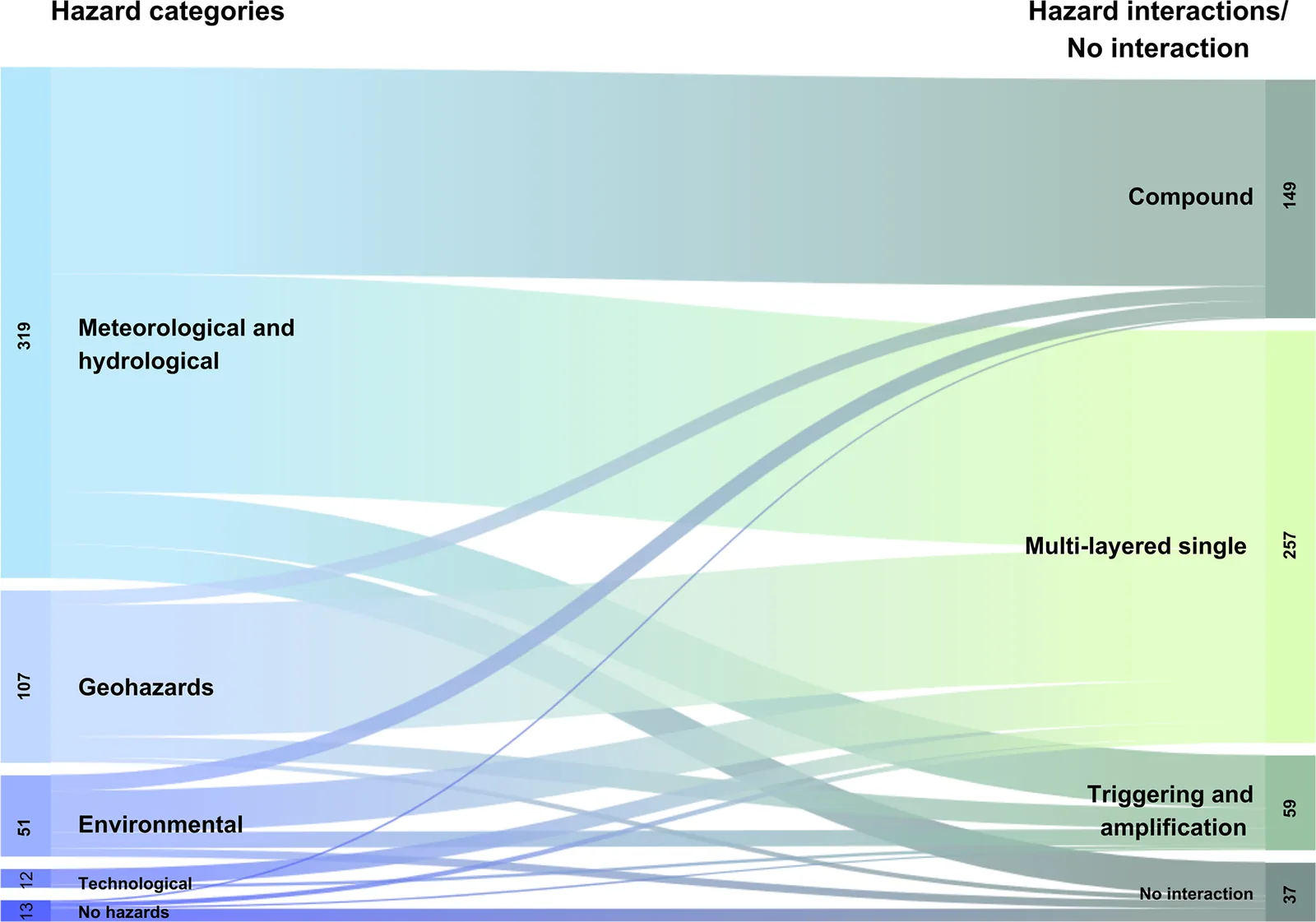
- Of 174 hazard-related papers, 49% analysed multiple hazards separately and overlaid the results. 51% considered interactions between hazards.
- Meteorological and hydrological hazards made up 64% of the 502 hazards studied. Geohazards made up 21%.
- Compound events were 30% of hazards and triggering or amplification events were 12%. Composite indicators were the most common tool for both, and probability-based indicators were not used for triggering and amplification.
- Hazard indicators dominated at 88% of studies, and only 20% of studies integrated hazard, vulnerability and risk/impact.
- Only 15 studies included some stakeholder engagement. Terminology also differs between groups.
Limitations
- The review covers only peer-reviewed literature and excludes grey literature. The authors call for future work with stakeholders, such as interviews.
- The search terms were not exhaustive, and papers on some topics, such as human health and infrastructure performance, were excluded.
Glossary
- Multi-layer single hazard: An approach that analyses several hazards separately in one place and overlays the results without considering interactions.
- Compound hazard: Hazards that occur together or in close succession, or that overlap in space or time.
- Composite indicator: A single score that combines several indicators; also called an index.
- Triggering and amplification: One hazard causes another or makes it more likely or stronger.
Original paper
Review article: Towards multi-hazard and multi-risk indicators – a review and recommendations for development and implementation
Natural Hazards and Earth System Sciences · 31 October 2025
AI-generated summary of the original article; changes were made. Check the original before relying on it.