Open Sentinel-1 dataset labels oil slicks and look-alikes in the Eastern Mediterranean
The authors released a labeled set of radar image patches with 3225 oil objects and many look-alike scenes, so oil spill detectors can be tested on a common benchmark.
Why it matters
Oil spill detection studies have mostly used private datasets, which makes their results hard to compare. A shared, open dataset allows direct comparison of detectors. The sorted look-alike patches also show which ocean and weather features a model confuses with oil.
What they did
The authors took Sentinel-1 radar scenes from 2019 over the Eastern Mediterranean and corrected and normalized them. Two human interpreters marked oil slicks as bounding boxes, and only slicks both agreed on were kept. Patches without oil but with look-alikes were found using an object detector, then sorted into groups with K-means clustering on image features. The paper also explains how winds, waves, eddies, films, rain, ships and radio interference create dark or bright radar signatures, and tests an earlier detector as a baseline.
Key findings
- The oil set has 3225 oil objects across 1365 image patches.
- The no-oil set has 2290 patches with look-alikes or other notable phenomena, and the paper’s introduction counts 2990 patches.
- No-oil patches were clustered into 12 groups for open water and 5 groups for coastal areas to balance the look-alike types.
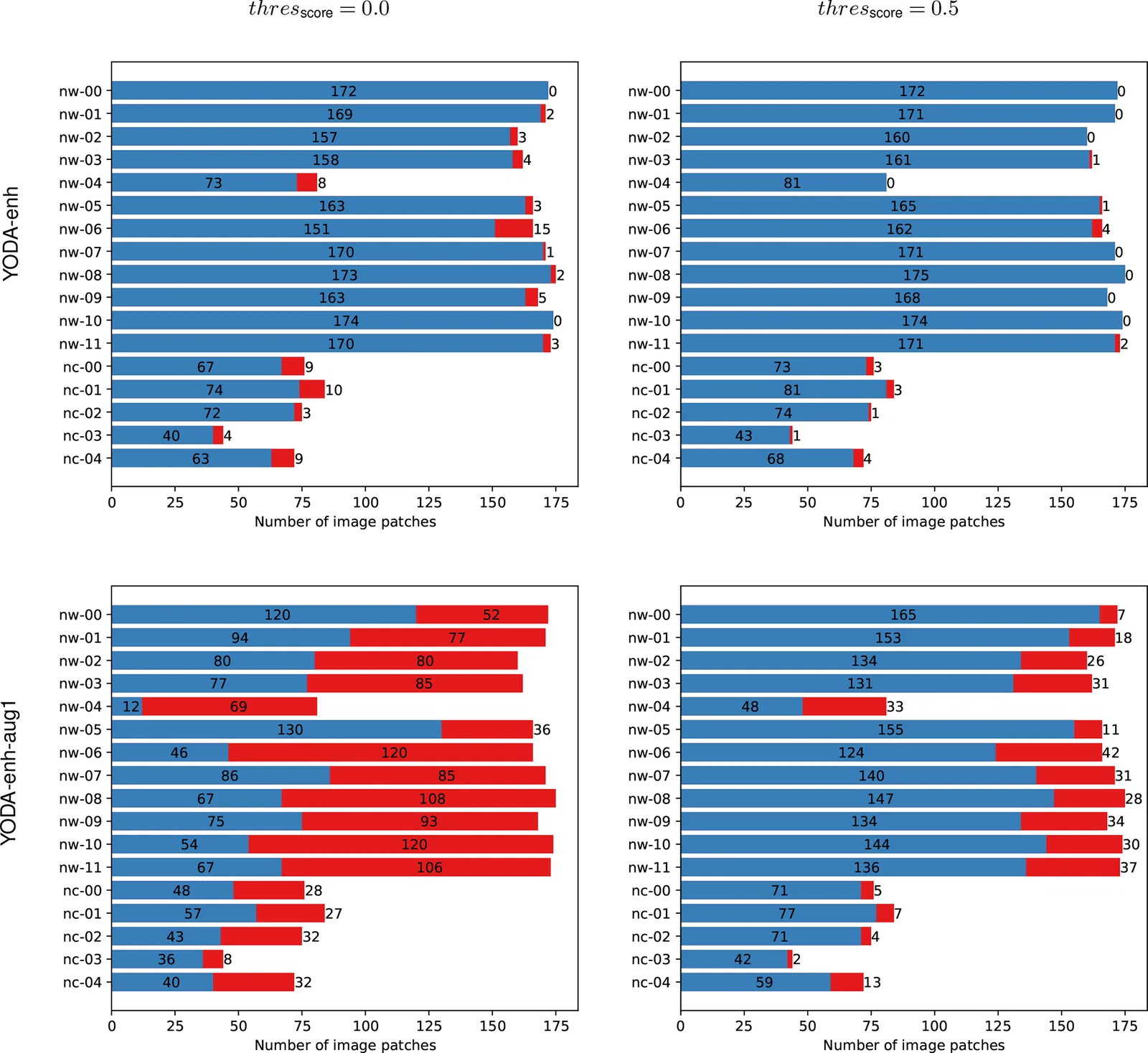
- Two earlier detector models were evaluated on the set, showing how often they fire on no-oil patches.
- The paper gives worked examples of look-alike sources, such as land breeze fronts, internal waves, eddies, rain cells, wakes and radio interference.
Limitations
- No ground-truth spill reports exist, so labeled slicks may include other chemical spills, and some annotations may be wrong.
- Cluster groups are not clean look-alike types, since one patch can hold several sources, and not all patches were checked against supplementary data.
- The data cover only 2019 in the Eastern Mediterranean, so models may do worse in other regions.
Glossary
- SAR: Synthetic Aperture Radar, a satellite radar that images the surface day and night and through clouds.
- Look-alike: A dark patch on a radar image that is not oil but looks like an oil slick.
- K-means clustering: An unsupervised method that groups items by similarity of their features.
- Intersection over union (IoU): A score of how much a detected box overlaps the ground-truth box.
Original paper
Dataset of oil slicks, look-alikes and remarkable SAR signatures obtained from Sentinel-1 data in the Eastern Mediterranean Sea
Earth System Science Data · 4 December 2025
AI-generated summary of the original article; changes were made. Check the original before relying on it.