Clouds and aerosols · Observations
New weather and climate research on clouds and aerosols with observations as the main approach, one page per paper.
All summaries
-
 Clouds and aerosols
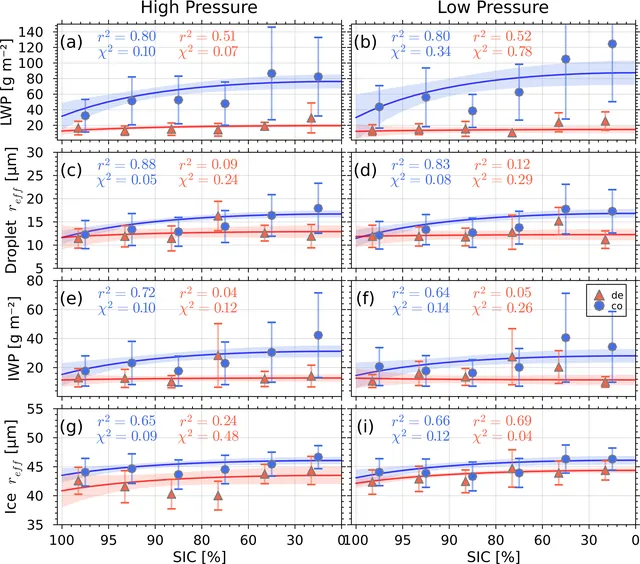
Alaskan winter mixed-phase clouds respond to nearby sea ice loss and show multi-year cycles
Over 14 winters at Utqiaġvik, mixed-phase clouds linked to upwind sea ice by water vapour transport hold more liquid water as sea ice concentration falls, and their properties also swing in multi-year cycles.
-
 Clouds and aerosols
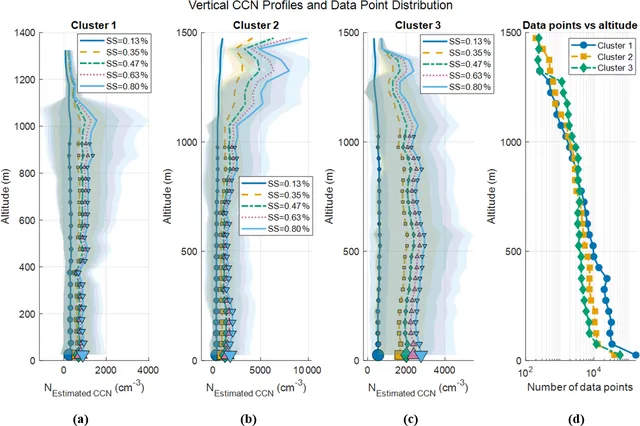
Balloon profiles near Houston show cloud-seed particle counts vary by air mass and height
Over Houston, the number of particles able to seed clouds depends strongly on where the air came from and on boundary-layer depth, and weather can change both at once.
-
 Clouds and aerosols
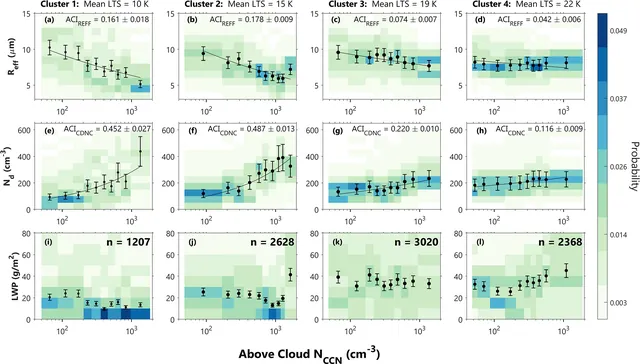
Smoke above clouds shrinks droplets most when the air is unstable
In the Southeast Atlantic, cloud droplets respond to smoke just above cloud top mainly when the lower atmosphere is unstable, while in stable air the below-cloud aerosol matters more.
-
 Clouds and aerosols
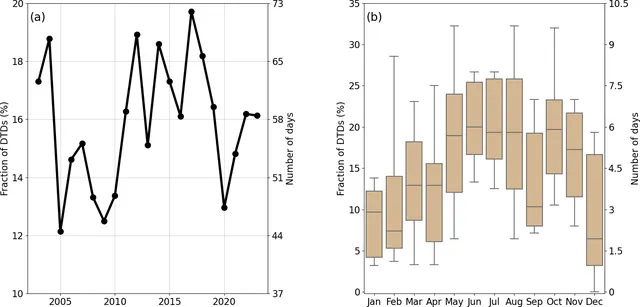
Saharan dust reached Monte Cimone on 15.8 % of days over 21 years, with no trend
Over 2003–2023, Saharan dust reached an Italian mountain station on about 58 days a year, with no trend, and longer summer events brought the largest coarse-particle rises.
-
 Clouds and aerosols
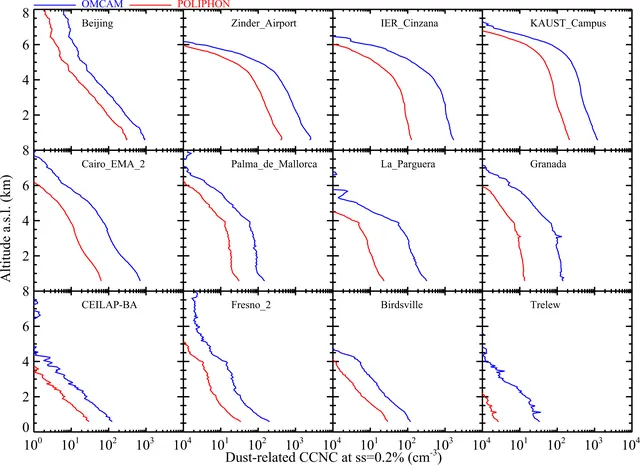
Global dust conversion factors for lidar CCN and INP profiles vary by region
A new dataset of dust conversion factors from 198 AERONET sites lets lidar profiles be turned into cloud-nucleating particle estimates, and the two retrievals compared agree within an order of magnitude.
-
 Clouds and aerosols
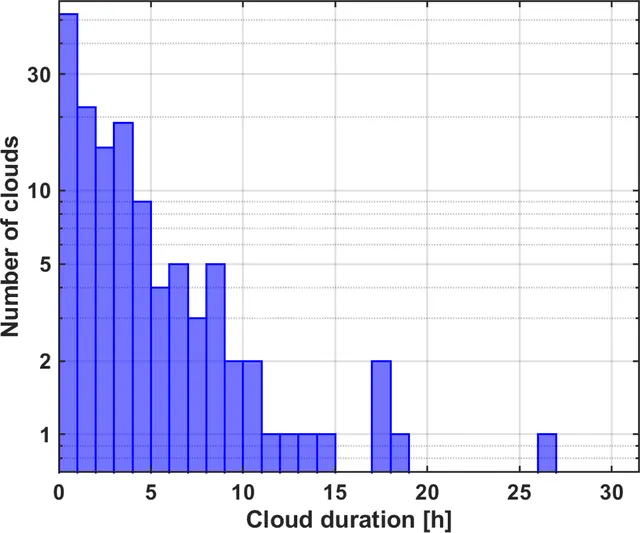
Arctic mixed-phase clouds lasted by constantly forming new droplets, with plentiful ice nuclei
Year-round lidar and radar data from near the North Pole suggest long-lived Arctic mixed-phase clouds persist because new droplets keep forming and ice-nucleating particles never run short.