Atmospheric chemistry · Other
New weather and climate research on atmospheric chemistry whose main contribution is a finding rather than models and methods, observations or AI and machine learning, one page per paper.
All summaries
-
 Atmospheric chemistry
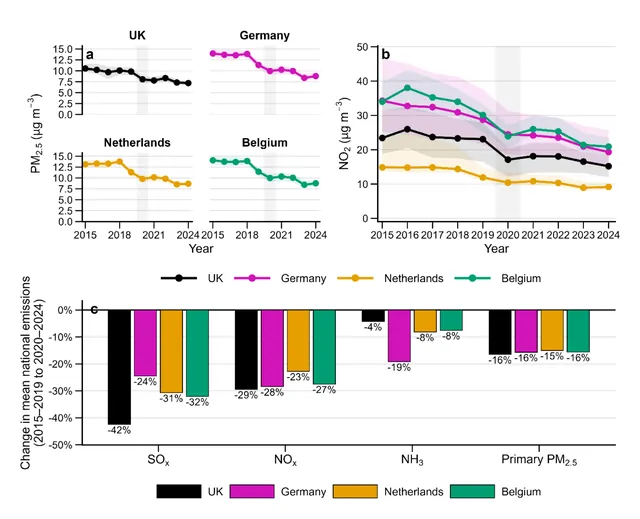
UK fine particle levels fell sharply after 2019, mainly from less ammonium nitrate
The authors find that UK PM2.5 dropped quickly from 2019-2020 mainly because ammonium nitrate fell, as lower nitrogen oxide emissions across Europe cut the pollution arriving from the continent.
-
 Atmospheric chemistry
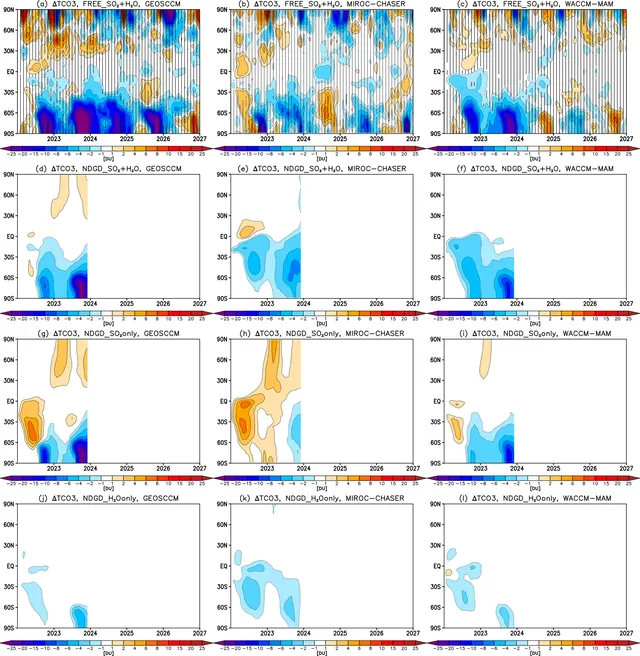
Models show Hunga eruption lowered southern ozone, with chemistry and dynamics equally important
In four-model simulations, the 2022 Hunga eruption reduced ozone in the southern mid- and high latitudes, with chemical and dynamical causes about equally large, but natural variability makes the signal hard to detect.
-
 Atmospheric chemistry
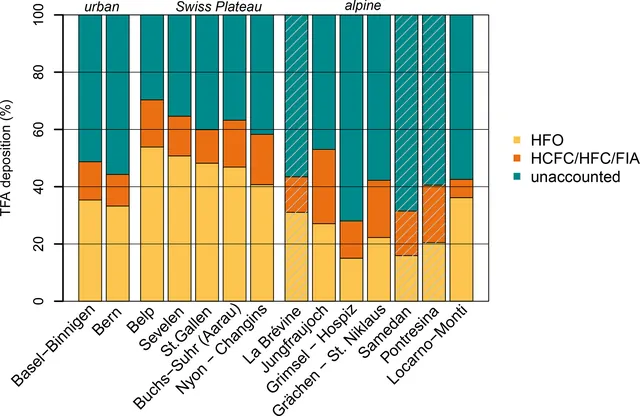
TFA in Swiss rain and rivers rose four to six times since the 1990s; known sources explain part
Swiss rain and river TFA levels have climbed several-fold since 1996/1997, and simulated breakdown of known fluorinated gases explains only about 63 % of the TFA deposited on the Swiss Plateau.
-
 Atmospheric chemistry
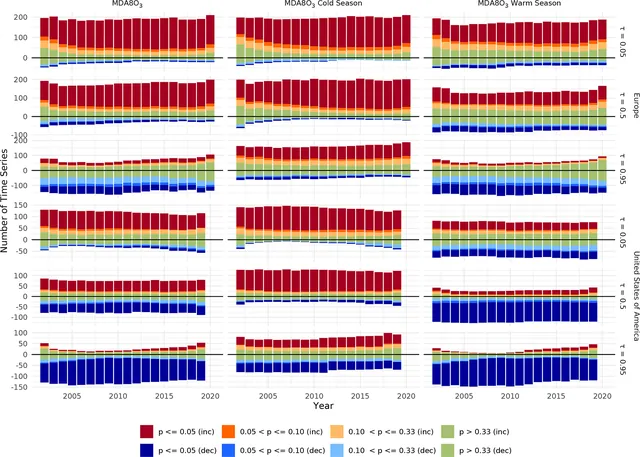
Urban ozone peaks fall while low ozone rises in Europe and the USA, 2000–2021
Across 353 urban sites, low and median ozone levels mostly rose while the highest levels mostly fell, with signs of renewed rises at the top end in the US Intermountain West.
-
 Atmospheric chemistry
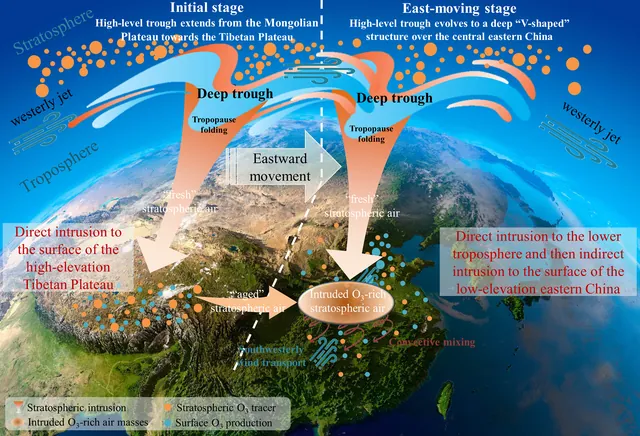
A June 2013 trough pulled stratospheric ozone down across China, adding to surface ozone pollution
In one June 2013 event, stratospheric ozone driven by an upper-level trough reached the Tibetan Plateau surface and raised lower-troposphere ozone across eastern China, and the EAC4 reanalysis matched ozonesonde profiles well.
-
 Atmospheric chemistry
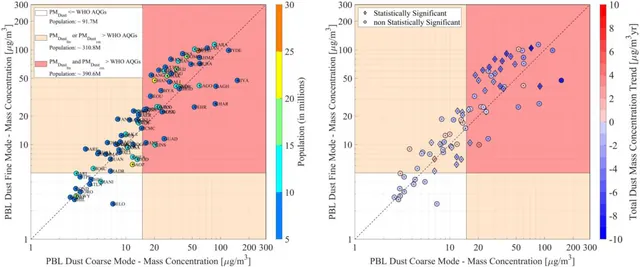
Satellite data show dust above WHO limits in most of 81 large cities
Using 16 years of satellite lidar data, the authors find that dust in the lowest atmospheric layer exceeds WHO annual guidelines for fine particles in 87.7 % of 81 large cities, though dust is mostly declining.
-
 Atmospheric chemistry
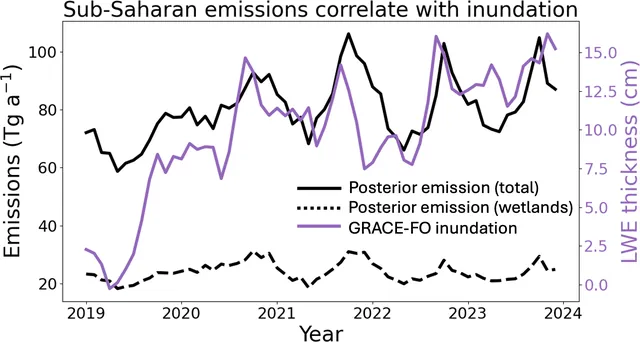
Satellite data show global methane emissions surged in 2020–2021, then fell
Using TROPOMI satellite data, the authors estimate global methane emissions rose from 560 Tg a−1 in 2019 to 587–592 Tg a−1 in 2020–2021, with sub-Saharan African wetlands, especially in South Sudan, likely playing a major role.
-
 Atmospheric chemistry
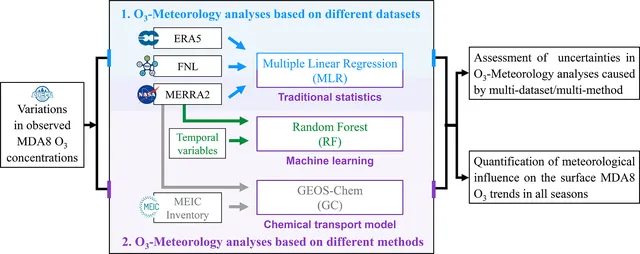
Weather pushed up China's ozone trends in all seasons, but methods disagree most
Across three weather datasets and three methods, meteorology almost always raised China's surface ozone from 2013 to 2022, but the choice of method changes the size of that effect more than the choice of dataset.
-
 Atmospheric chemistry
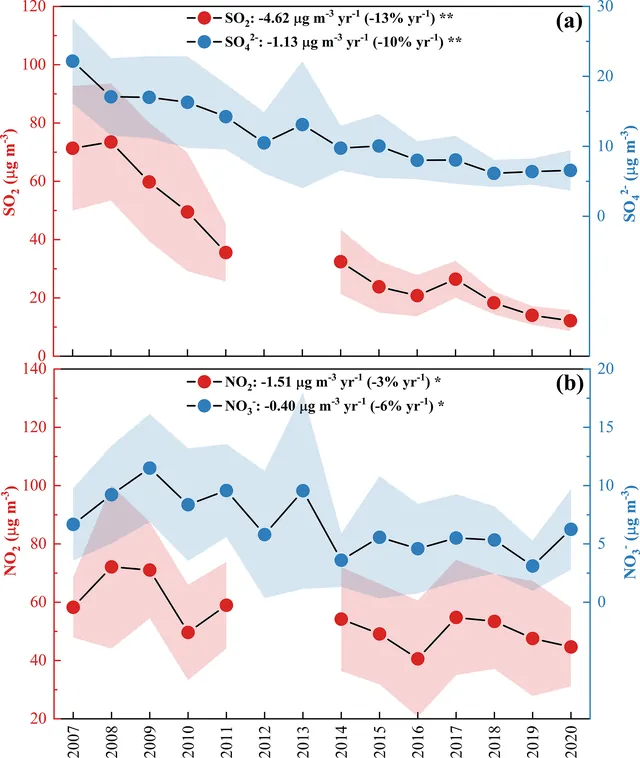
PM2.5 in south China fell 2007–2020 while nitrate's share doubled and aerosol acidity dropped
Winter PM2.5 at a Pearl River Delta background site fell from 87.1 to 34.0 µg m−3 over 14 years, but nitrate dropped more slowly than sulfate, so secondary species and nitrate now matter more.
-
 Atmospheric chemistry
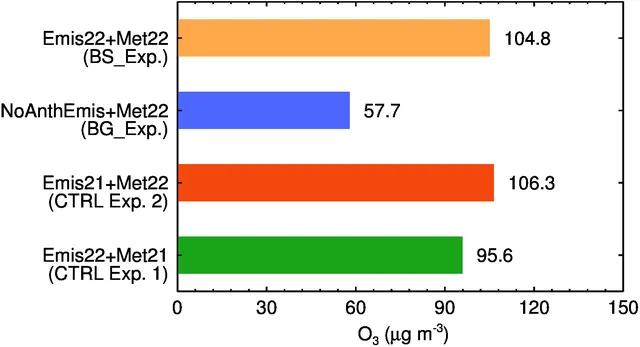
Fewer low clouds and weaker cloud–radiation effects drove the 2022 ozone jump in eastern China
In the Yangtze River Delta, the sharp rise in summer ozone in 2022 came mainly from fewer low clouds and more sunlight, which outweighed the gains from cutting emissions.