Atmospheric chemistry
New weather and climate research on atmospheric chemistry, one page per paper.
All summaries
-
 Atmospheric chemistry
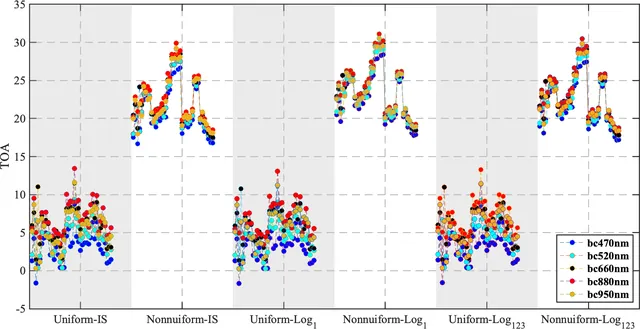
Realistic particle size and mixing shift black carbon radiative forcing in a coal region
In an industrial coal region of Shanxi, using the observed three-peak particle size and internal mixing, instead of simple standard assumptions, changes estimated absorption and radiative forcing by amounts comparable to local greenhouse gas forcing.
-
 Atmospheric chemistry
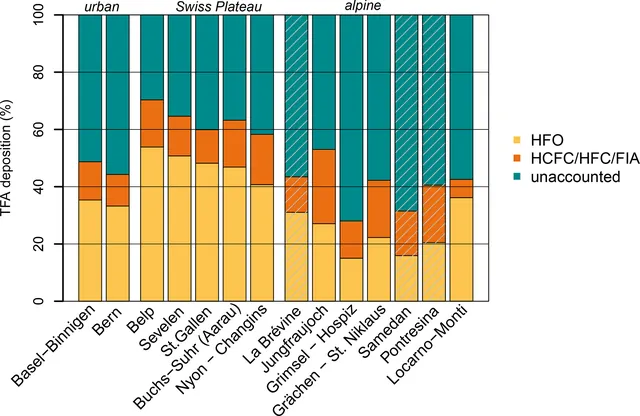
TFA in Swiss rain and rivers rose four to six times since the 1990s; known sources explain part
Swiss rain and river TFA levels have climbed several-fold since 1996/1997, and simulated breakdown of known fluorinated gases explains only about 63 % of the TFA deposited on the Swiss Plateau.
-
 Atmospheric chemistry
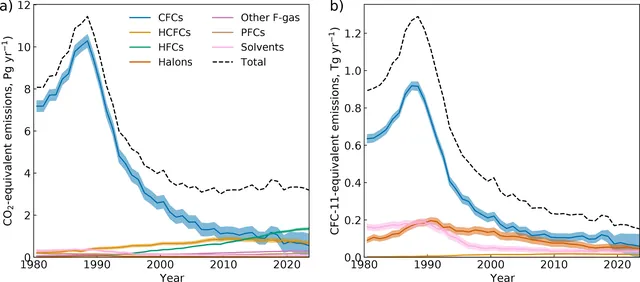
AGAGE data show 2023 emissions and levels of 42 trace gases, with limits
Using AGAGE station measurements and a simple 12-box atmosphere model, the authors publish yearly global emissions and abundances for 42 trace gases through 2023, and explain how they are derived and where they fall short.
-
 Atmospheric chemistry
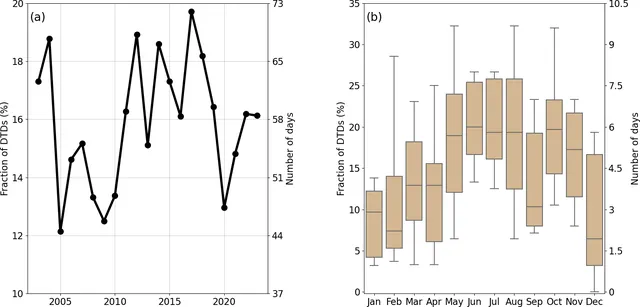
Saharan dust reached Monte Cimone on 15.8 % of days over 21 years, with no trend
Over 2003–2023, Saharan dust reached an Italian mountain station on about 58 days a year, with no trend, and longer summer events brought the largest coarse-particle rises.
-
 Atmospheric chemistry
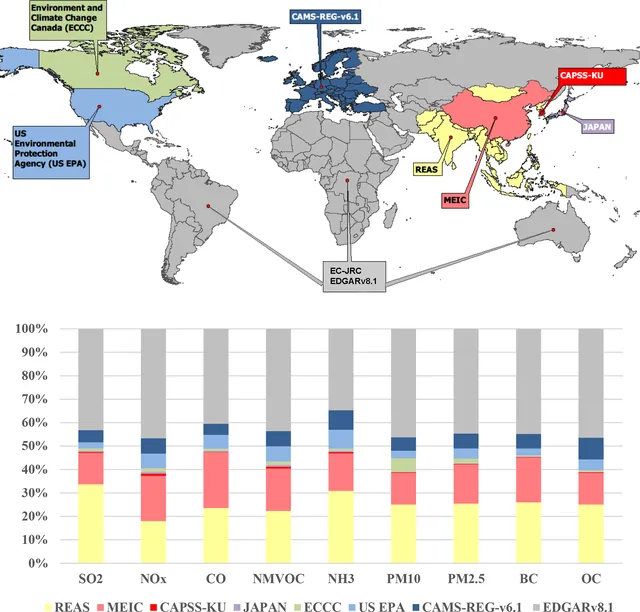
A global air pollutant emission mosaic now covers 2000–2020 at monthly resolution
HTAP_v3.2 blends official regional emission inventories with the EDGAR global inventory into one monthly, gridded dataset for nine air pollutants over 2000–2020.
-
 Atmospheric chemistry
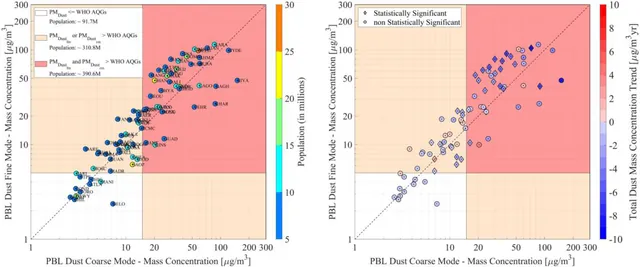
Satellite data show dust above WHO limits in most of 81 large cities
Using 16 years of satellite lidar data, the authors find that dust in the lowest atmospheric layer exceeds WHO annual guidelines for fine particles in 87.7 % of 81 large cities, though dust is mostly declining.
-
 Atmospheric chemistry
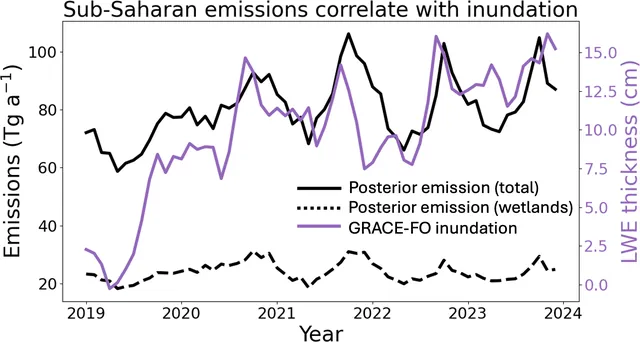
Satellite data show global methane emissions surged in 2020–2021, then fell
Using TROPOMI satellite data, the authors estimate global methane emissions rose from 560 Tg a−1 in 2019 to 587–592 Tg a−1 in 2020–2021, with sub-Saharan African wetlands, especially in South Sudan, likely playing a major role.
-
 Atmospheric chemistry
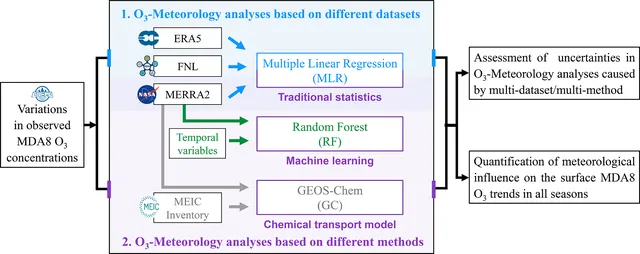
Weather pushed up China's ozone trends in all seasons, but methods disagree most
Across three weather datasets and three methods, meteorology almost always raised China's surface ozone from 2013 to 2022, but the choice of method changes the size of that effect more than the choice of dataset.
-
 Atmospheric chemistry
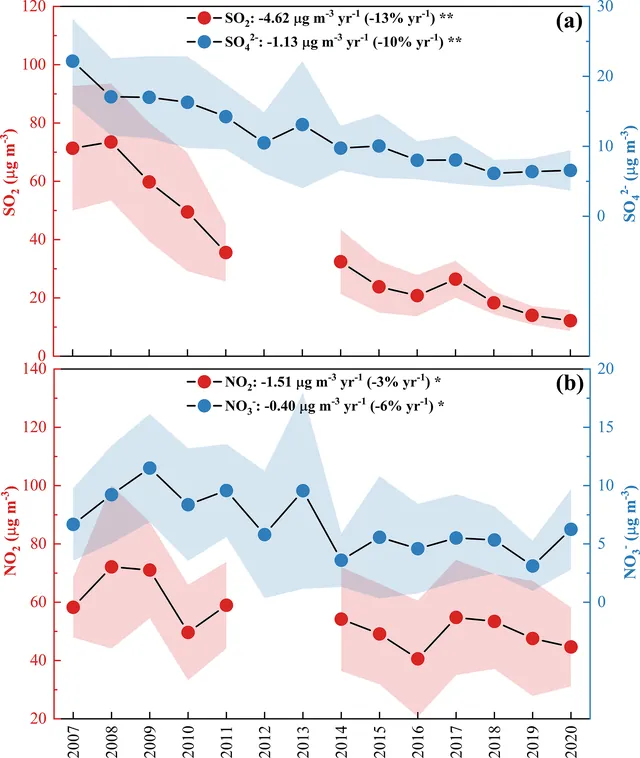
PM2.5 in south China fell 2007–2020 while nitrate's share doubled and aerosol acidity dropped
Winter PM2.5 at a Pearl River Delta background site fell from 87.1 to 34.0 µg m−3 over 14 years, but nitrate dropped more slowly than sulfate, so secondary species and nitrate now matter more.