Oceans
New weather and climate research on oceans, one page per paper.
All summaries
-
 Oceans
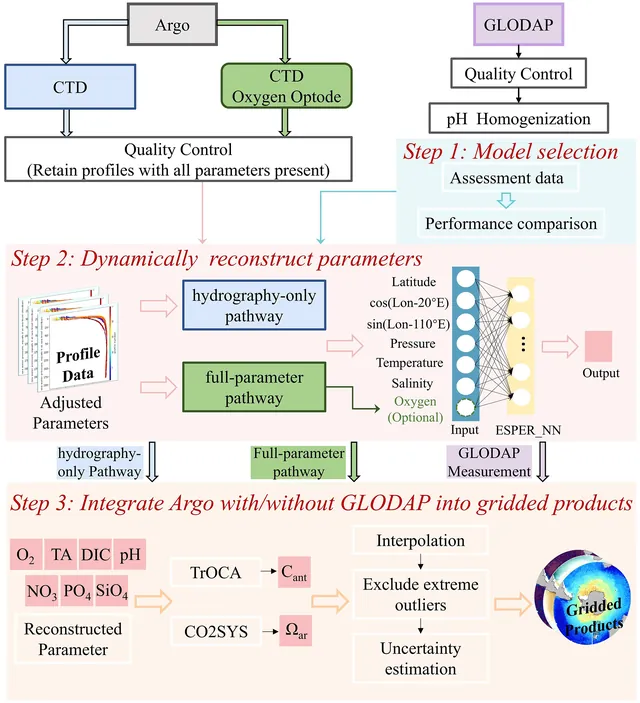
Argo floats and machine learning yield gridded Southern Ocean carbon maps to 5600 m
The authors used a neural network to turn Argo float temperature, salinity and sometimes oxygen into 1°×1° maps of Southern Ocean carbon chemistry, including anthropogenic carbon, with uncertainties.
-
 Oceans
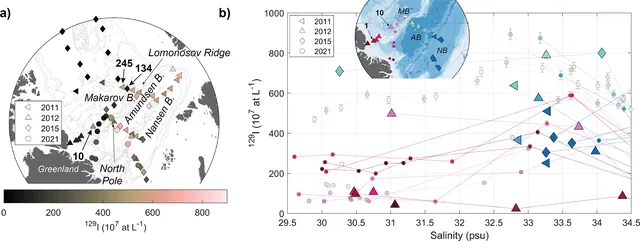
Iodine-129 and uranium-236 track Atlantic and Pacific water shifts in the central Arctic
Two radionuclide tracers show that in 2021 Pacific-influenced surface water met Atlantic-origin water at the Lomonosov Ridge, that this front moved from the Makarov Basin toward the ridge between 2011/2012 and 2015, and that Atlantic layer ages rose from 2015 to 2021 in several regions.
-
 Oceans
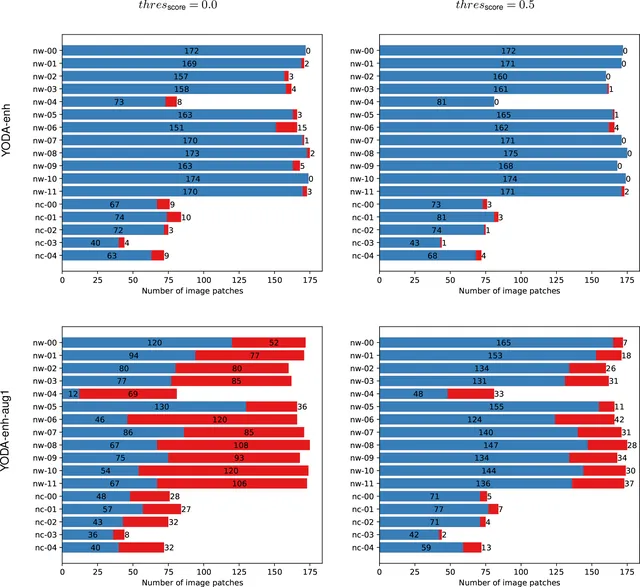
Open Sentinel-1 dataset labels oil slicks and look-alikes in the Eastern Mediterranean
The authors released a labeled set of radar image patches with 3225 oil objects and many look-alike scenes, so oil spill detectors can be tested on a common benchmark.
-
 Oceans
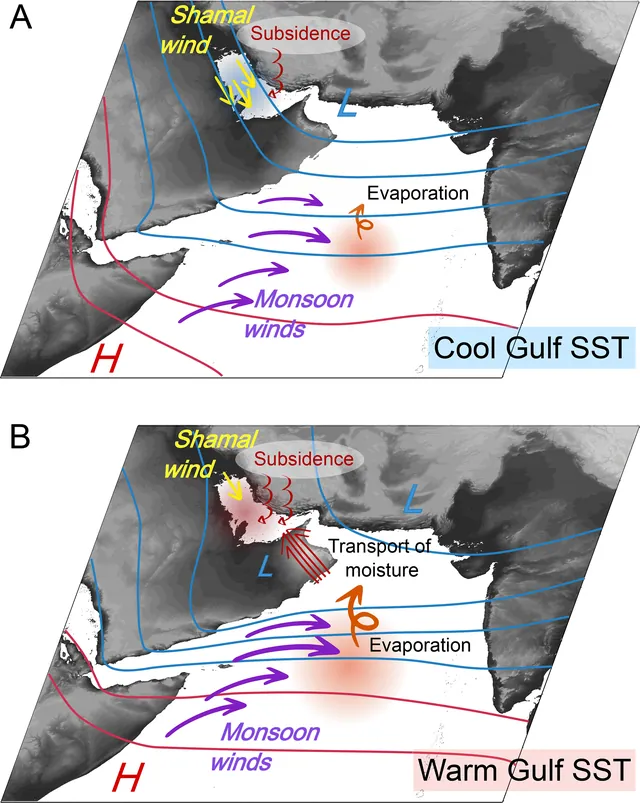
Weaker Shamal winds, La Niña and negative NAO drive the Gulf's hottest summers
Extreme summer sea temperatures in the Arabian Gulf come from weaker local winds and trapped moist air, and ENSO and the NAO together explain over 50 % of the year-to-year variation.
-
 Oceans
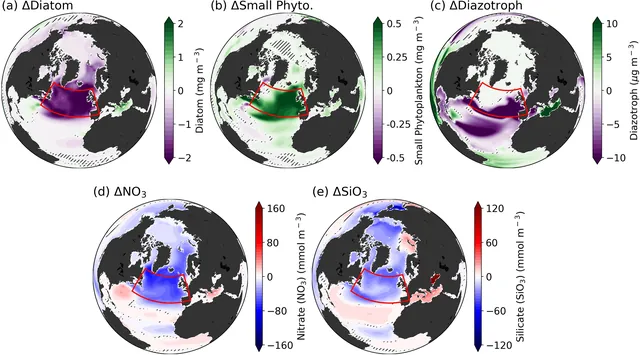
Subpolar North Atlantic plankton stay smaller even after CO2 returns to its starting level
In a climate model, removing CO2 back to its starting level does not bring back large diatoms in the Subpolar North Atlantic, because weaker ocean circulation keeps surface nutrients low, and this cuts carbon export.
-
 Oceans
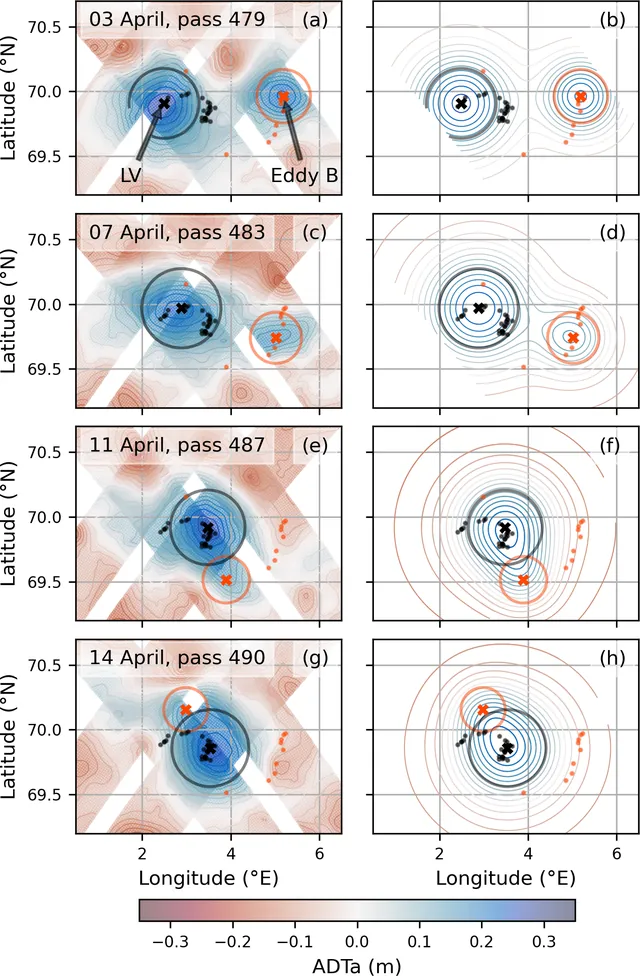
Glider and SWOT satellite watch a smaller eddy merge into the Lofoten Vortex
Combining a glider with SWOT altimetry, researchers saw a smaller, stronger eddy approach, co-rotate with and merge into the Lofoten Vortex in April 2023, spinning it up.
-
 Oceans
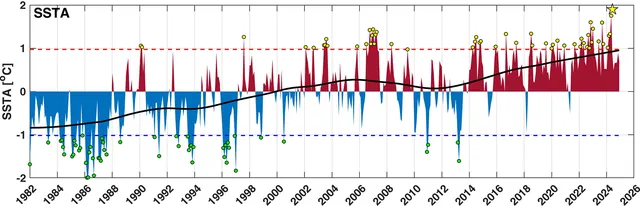
North Sea marine heatwaves rose mainly because average sea surface temperature climbed
Over 1982–2024, rising mean sea surface temperature, not changes in variability, drove most of the increase in North Sea marine heatwaves, with a clear step up after 2013.
-
 Oceans
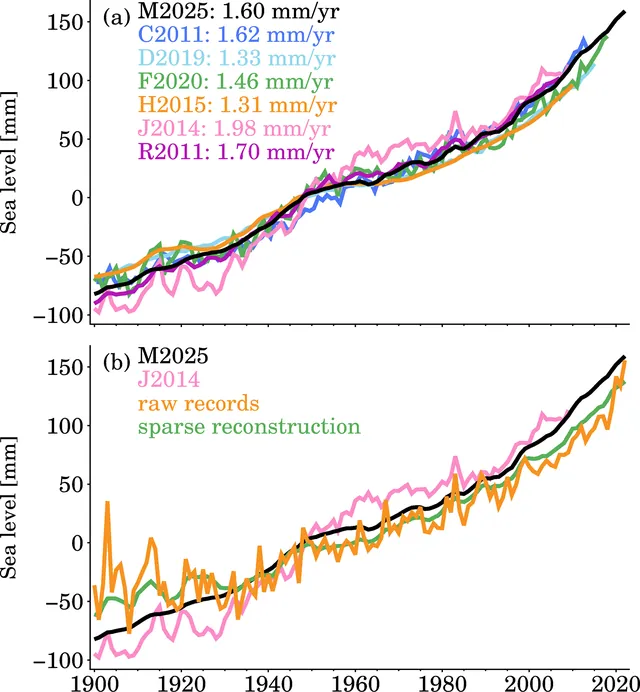
Sea level rebuilt at 945 tide gauges since 1900 shows a rise of 1.75 mm per year
The authors filled the gaps in 945 tide gauge records from 1900 to 2022 with a physics-based method, and the result matches other global sea level curves while following the raw records where they exist.
-
 Oceans
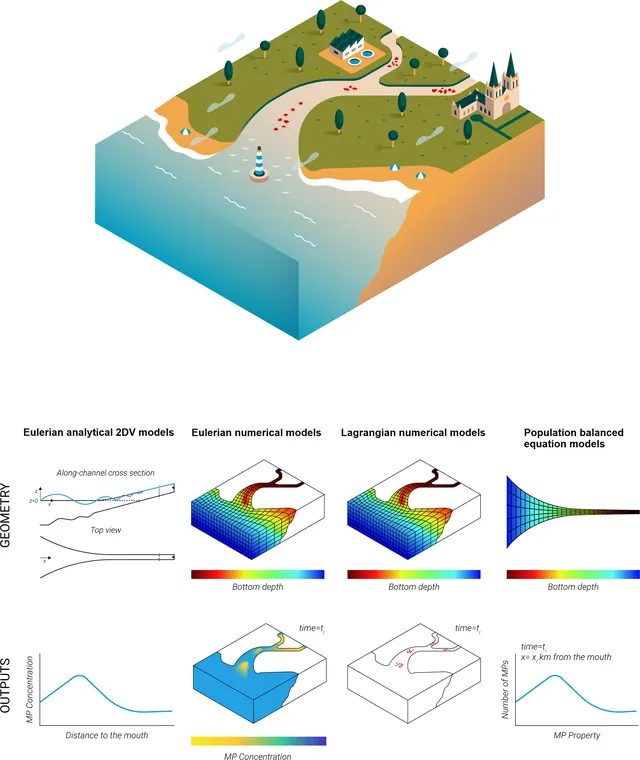
Review compares four ways to model microplastics in estuaries and sets out good practice
Most estuary microplastic models use particle tracking, but all approaches are limited by scarce field data for inputs and validation, so models should be kept as simple as the question allows and tested with sensitivity runs.