Cryosphere
New weather and climate research on cryosphere, one page per paper.
All summaries
-
 Cryosphere
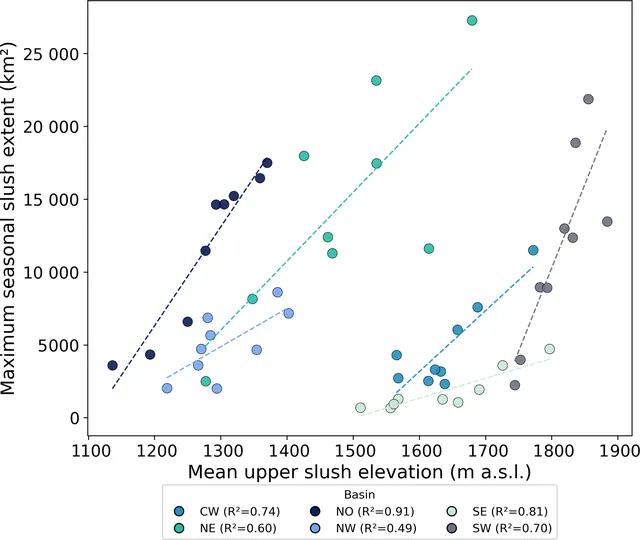
Slush covers far more of Greenland's ice sheet than lakes, channels and crevasses combined
A nine-year satellite map shows slush is the largest mapped surface meltwater feature on the Greenland Ice Sheet, growing and reaching higher in high-melt years.
-
 Cryosphere
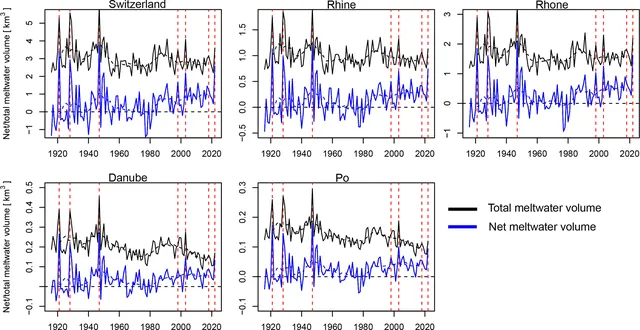
Swiss glaciers cushioned the 2022 drought, but total meltwater was lower than in 2003
In the 2022 drought, extra glacier melt offset water deficits in catchments with around 15 % glacier cover, yet shrinking glacier area meant total meltwater was already below the 2003 level in most catchments.
-
 Cryosphere
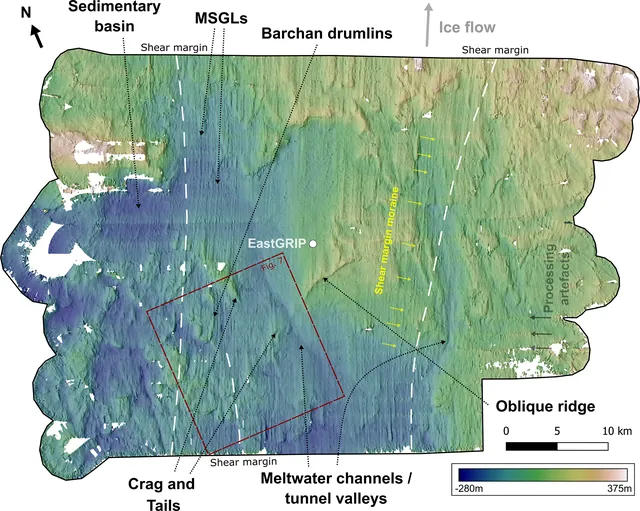
Streamlined bed landforms found under slow ice at the start of the NE Greenland Ice Stream
Swath radar shows long, streamlined bed ridges (mega-scale glacial lineations) beneath ice moving only about 60 m per year near the Northeast Greenland Ice Stream onset, which challenges the idea that they need fast flow.
-
 Cryosphere
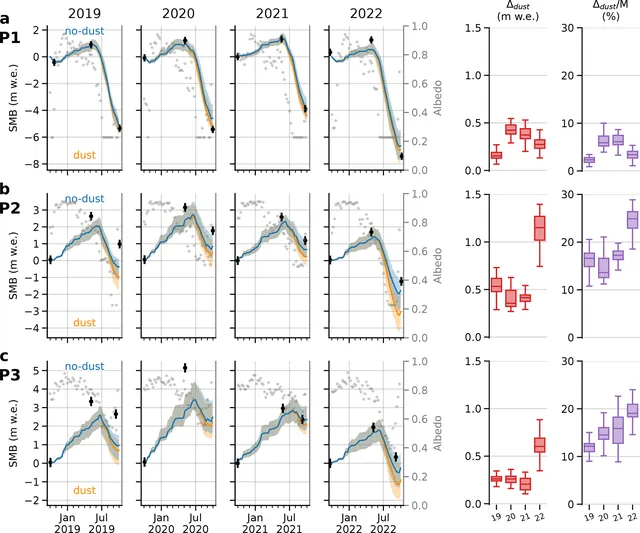
Saharan dust cut Argentière Glacier's 2022 mass balance by 0.63 m w.e., double earlier years
In a snow model of Argentière Glacier, mineral dust lowered annual surface mass balance by 0.31 to 0.45 m w.e. in 2019–2021 and by 0.63 m w.e. in 2022, most strongly just above the previous summer's snowline.
-
 Cryosphere
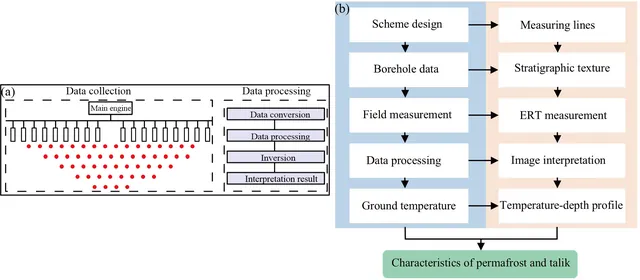
Thermokarst lakes on the Tibetan Plateau thaw permafrost and form through-taliks beneath them
In a Tibetan Plateau lake basin, ground resistivity surveys and borehole temperatures showed that three small thermokarst lakes have thawed the permafrost below them all the way through.
-
 Cryosphere
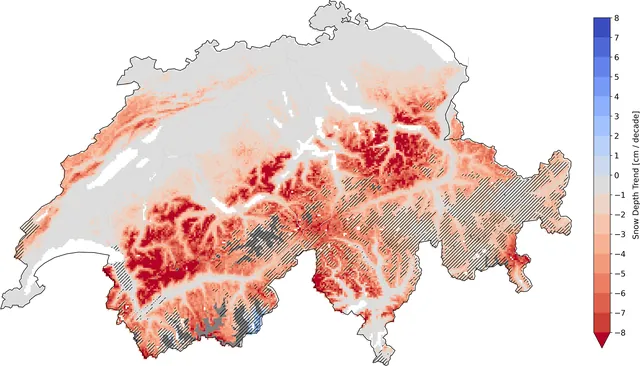
New 60-year Swiss snow maps track stations well, except at low elevations
A quantile-mapped snow model gives 1 km daily Swiss snow data since 1962 that works well above 1000 m and for yearly or regional use, but is weaker at low elevations, single grid points and short time spans.
-
 Cryosphere
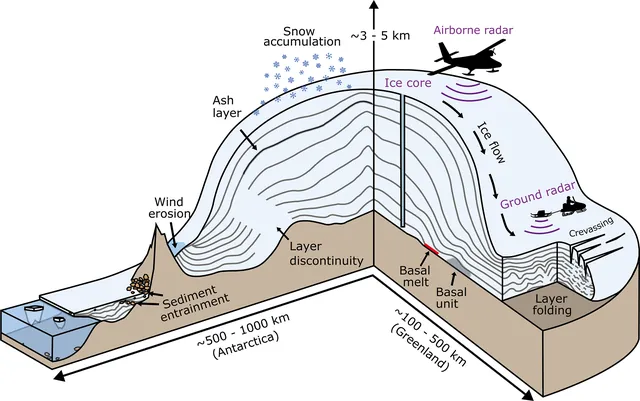
Radar-imaged ice layers could be built into a continent-wide age–depth model of Antarctica
Six decades of radar surveys have recorded dated layers inside Antarctic ice, but only a small part has been traced, and a community effort is needed to turn it into a continent-wide age model.
-
 Cryosphere
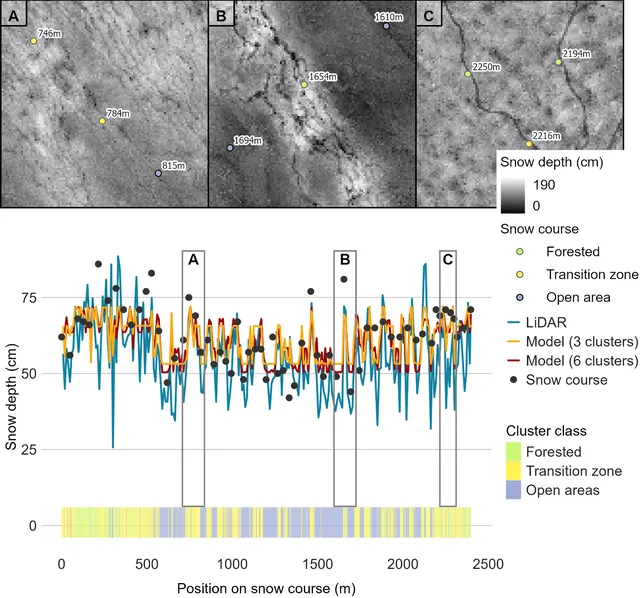
Drone LiDAR and clustering give daily snow depth and SWE maps in Finnish boreal sites
One winter of drone LiDAR surveys, grouped into three snow-pattern clusters and paired with daily sensor data, gave 1 m snow depth and SWE maps with SWE errors of 31–36 mm in two Finnish Lapland sites.
-
 Cryosphere
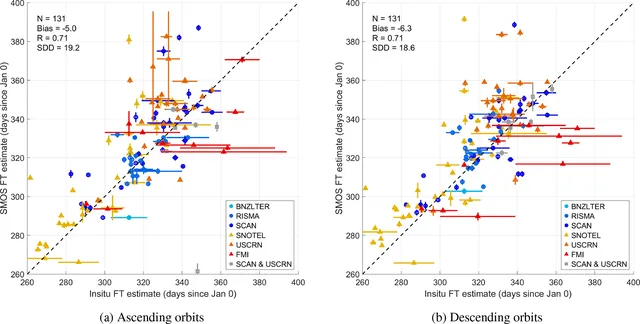
SMOS satellite product detects first autumn soil freezing, but later than ground sensors
The updated SMOS freeze–thaw product tracks when northern soils first freeze in autumn fairly well, with a lag of several days, and works poorly in spring and in areas with radio interference.
-
 Cryosphere
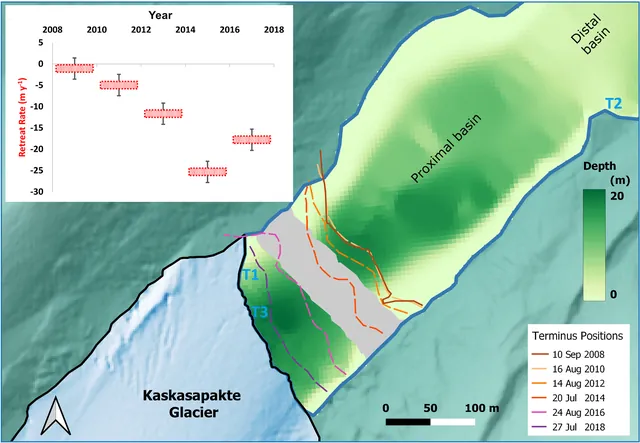
Warm lake water above 4 °C helped an Arctic Swedish glacier retreat quickly
At Kaskasapakte Glacier in Arctic Sweden, lake water warmer than 4 °C carved notches into the ice front and drove calving, and ice lost at the front made up about 30% of volume loss from 2015 to 2019.