Forecasting · Other
New weather and climate research on forecasting whose main contribution is a finding rather than models and methods, observations or AI and machine learning, one page per paper.
All summaries
-
 Forecasting
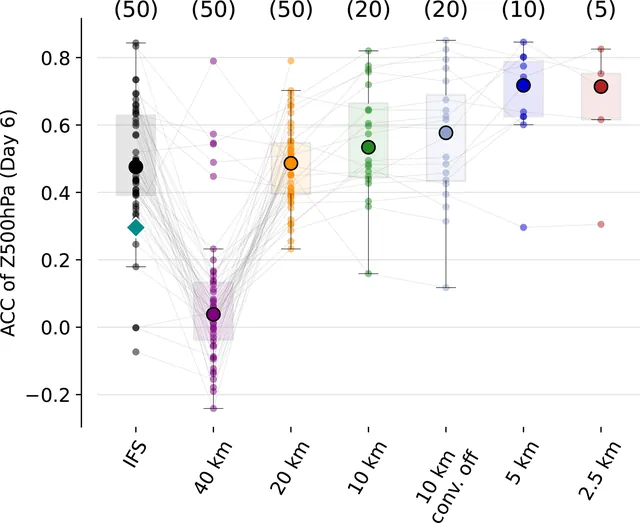
Finer grid spacing improves day-6 forecasts of three weather forecast busts in ICON
In three cases where the IFS forecast failed, global ICON runs with grid spacing of 5 km or finer better captured storm-driven upper-level potential vorticity (PV) changes and gave better day-6 skill, though some events stayed hard to predict.
-
 Forecasting
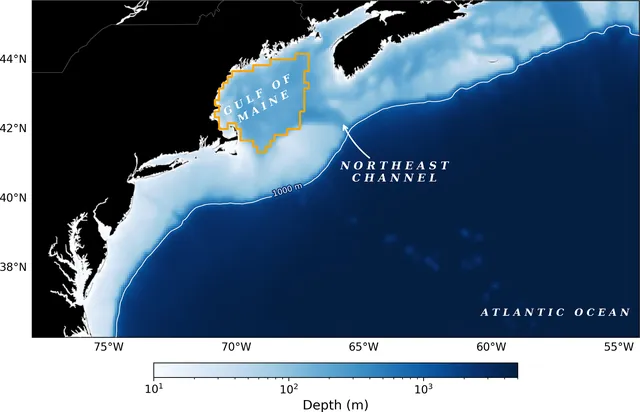
Regional model skilfully predicts Gulf of Maine bottom temperature, oxygen and acidity years ahead
A high-resolution regional ocean model can forecast Gulf of Maine bottom conditions for several years, and it points to cooler water, more oxygen and lower pH and aragonite saturation through 2027.
-
 Forecasting
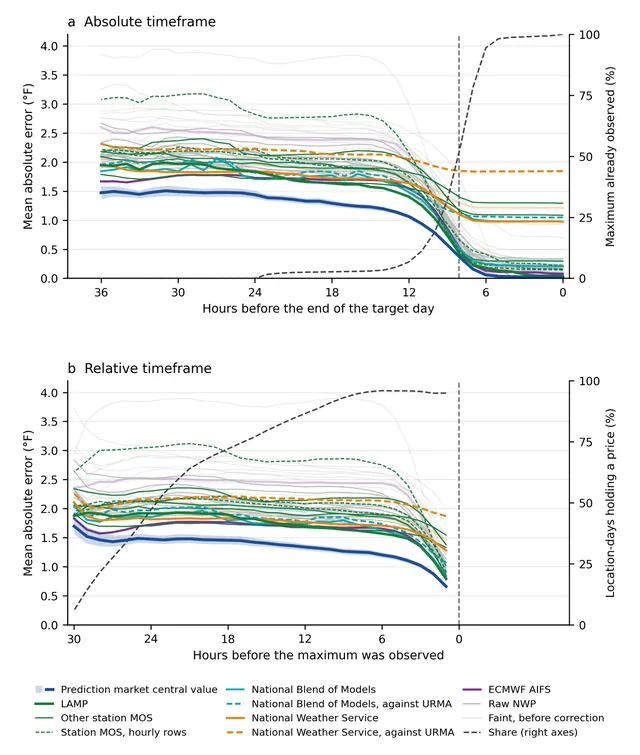
A prediction market beat 20 operational systems at forecasting daily high temperatures
In this preprint, prices on a daily-high-temperature prediction market had lower error than 20 operational forecast systems, including statistically corrected and human-edited forecasts, at nearly all lead times.
-
 Forecasting
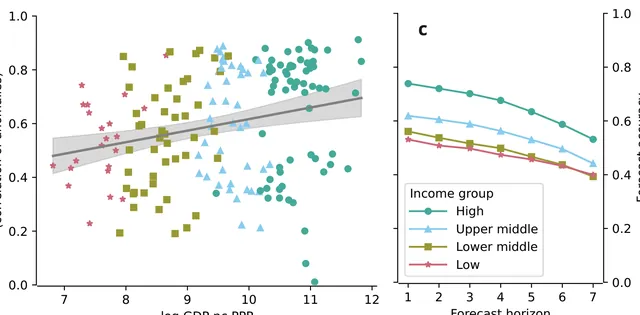
Temperature forecasts are much less accurate in low-income countries than in rich ones
A seven-day temperature forecast in a high-income country is about as accurate as a one-day forecast in a low-income country, and the gap has barely closed in 20 years.
-
 Forecasting
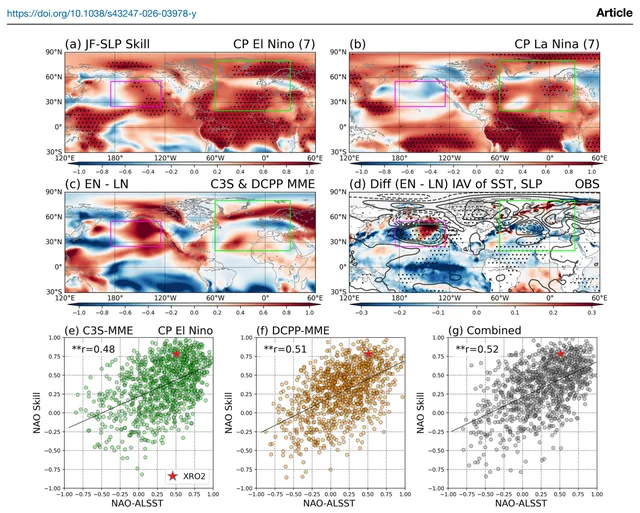
Central Pacific El Niño winters make North Atlantic Oscillation forecasts more skilful
In winters with a Central Pacific El Niño, seasonal forecasts of the North Atlantic Oscillation are much more skilful, probably because Aleutian-region ocean warmth feeds a link to the Atlantic.
-
 Forecasting
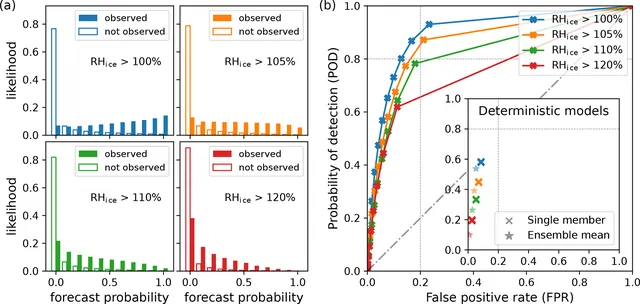
Ten-member ICON ensemble with two-moment ice scheme detects more ice-supersaturated air
Adding a two-moment ice scheme and a ten-member ensemble to the ICON model raises the share of ice-supersaturated regions detected from 0.4 to 0.6 for one run, and to 0.8 for a three-member vote.
-
 Forecasting
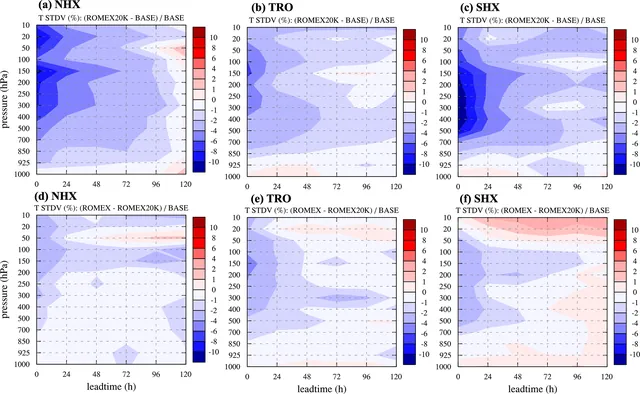
More radio occultation data improves weather forecasts in a NOAA-style system
Assimilating roughly 35 000 radio occultation profiles per day, nearly triple today's operational volume, improved forecasts of temperature, humidity and wind in a JEDI-GFS test, with no sign of saturation, though it added a bias in the lower stratosphere.
-
 Forecasting
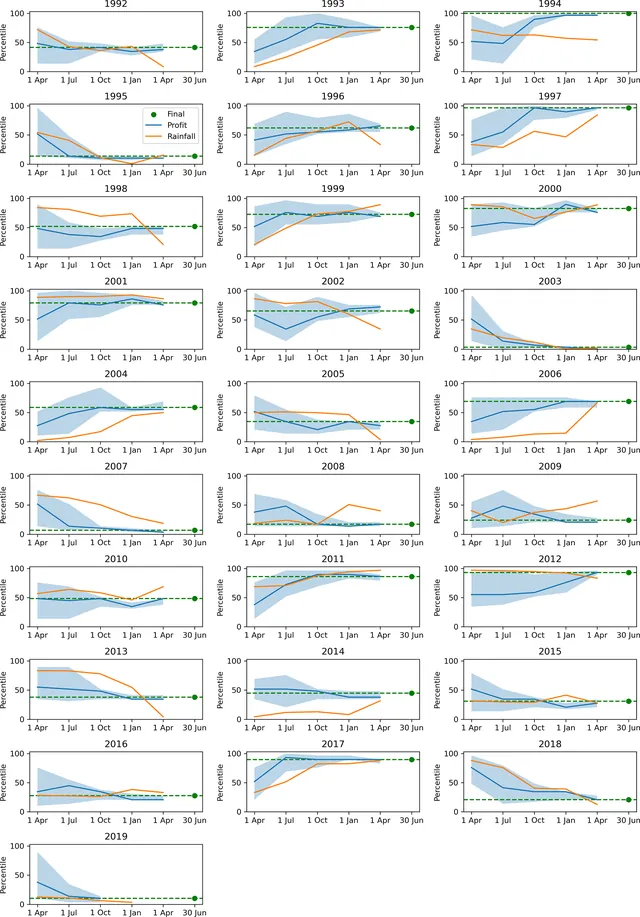
Integrated agricultural models forecast drought impacts sooner than rainfall
An integrated system forecasting farm profits and crop yields provides reliable drought warnings months ahead of rainfall-based indicators.