Other
New weather and climate research whose main contribution is a finding rather than models and methods, observations or AI and machine learning, one page per paper.
All summaries
-
 Forecasting
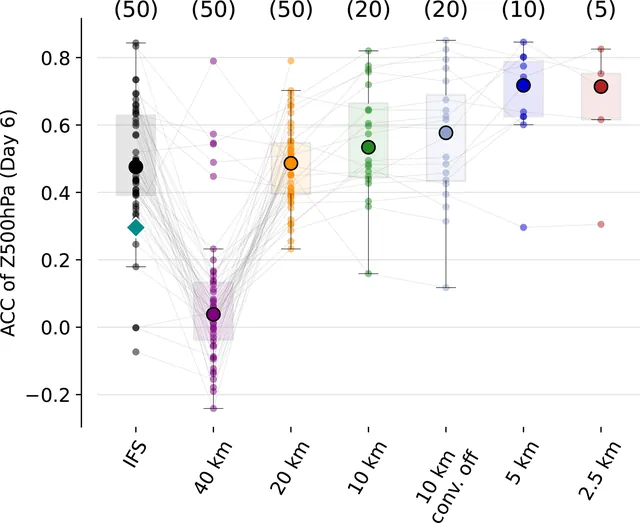
Finer grid spacing improves day-6 forecasts of three weather forecast busts in ICON
In three cases where the IFS forecast failed, global ICON runs with grid spacing of 5 km or finer better captured storm-driven upper-level potential vorticity (PV) changes and gave better day-6 skill, though some events stayed hard to predict.
-
 Climate change
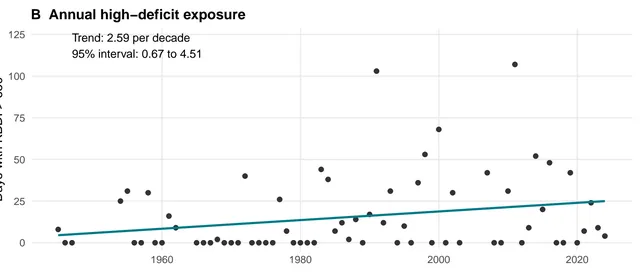
Station-derived drought near Apalachicola National Forest has increased since 1945
A drought index computed from the Tallahassee airport record shows rising annual dryness since 1945, clearest in May, but this does not prove forest-wide soil drying or a usable fire forecast.
-
 Clouds and aerosols
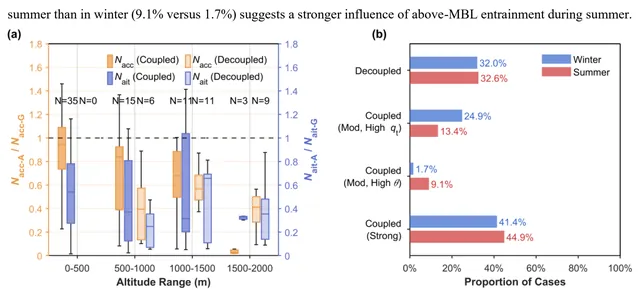
Accumulation-mode aerosol drives summer cloud droplet counts; winter also depends on Aitken particles
Over the Azores, summer cloud droplet numbers track accumulation-mode particle numbers, while in the cleaner winter air small Aitken-mode particles also matter, and decoupled boundary layers cut the aerosol that reaches cloud.
-
 Extremes
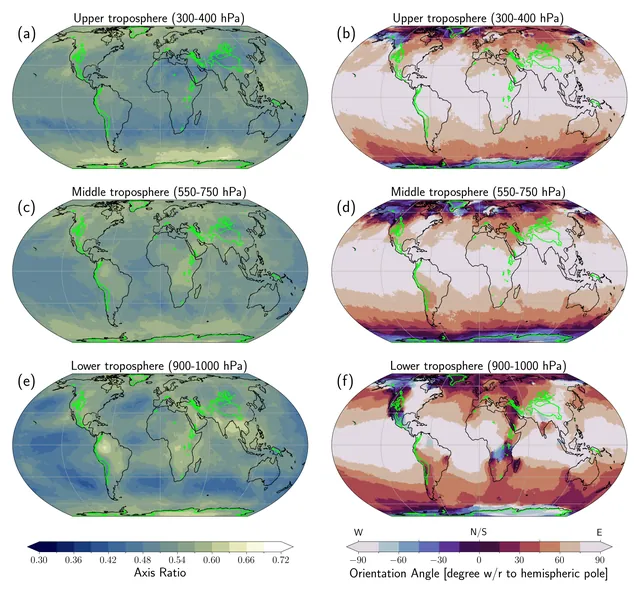
Surface heat extremes form tilted ellipses, not domes, and tropical ones stay shallow
In ERA5, near-surface heat extremes are elongated ellipses with a typical equivalent radius of 800km, reaching the upper troposphere far less often in the tropics than outside it, so the "heat dome" picture misleads.
-
 Extremes
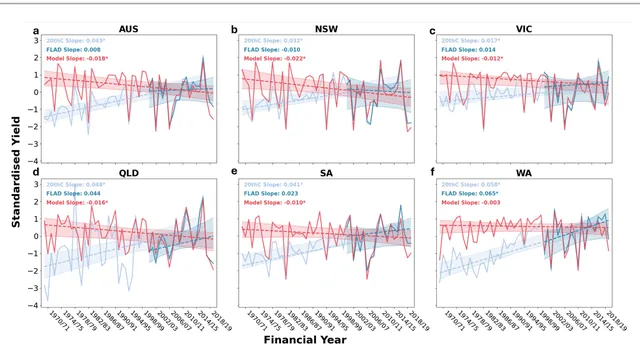
Drought and late-season heat are worsening for Australian wheat, masked by better farming
Using farm-level data, the authors find that climate extremes, mainly drought, drive most year-to-year wheat yield swings in Australia, and these extremes have grown since 1970 while technology has hidden the effect.
-
 Hydrology
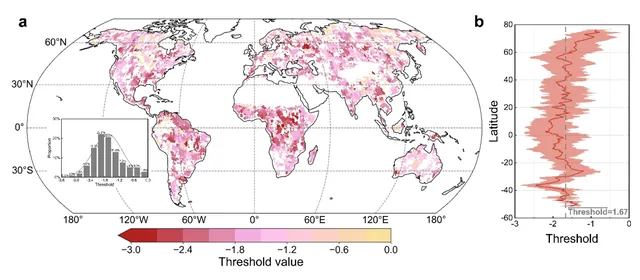
Water use efficiency first rises, then falls, as drought deepens over 57.5% of vegetated land
Ecosystem water use efficiency rises under mild drought but reverses once drought passes a threshold, so earlier reports of both rises and falls may describe two stages of one response.
-
 Cryosphere
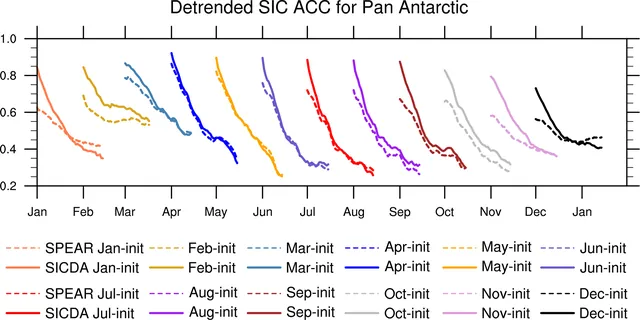
Assimilating sea ice concentration improves subseasonal Antarctic sea ice forecasts
Feeding satellite sea ice concentration into the starting state of GFDL's SPEAR forecast system gives better Antarctic sea ice forecasts out to 45 days, with bigger gains than in the Arctic.
-
 Extremes
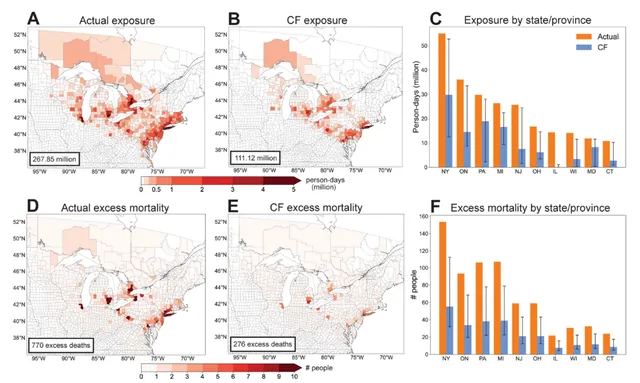
Climate change roughly tripled smoke pollution and deaths in the July 2026 fire event
A rapid attribution study estimates that human-caused climate change made the July 2026 wildfire smoke event about three times more harmful, with 770 excess deaths versus 276 in a world without climate change.
-
 Extremes
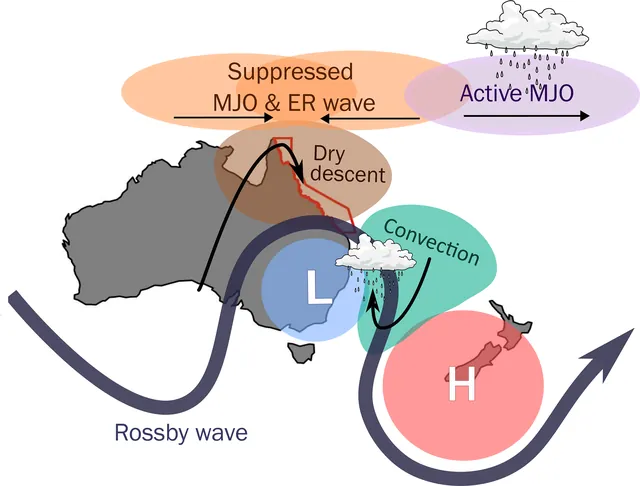
Stalled low-pressure systems and tropical waves keep Great Barrier Reef doldrums going
Doldrums over the Great Barrier Reef last longer when a cyclonic anomaly stalls over south-east Australia and tropical waves line up to keep westerly winds opposing the trade winds.
-
 Cryosphere
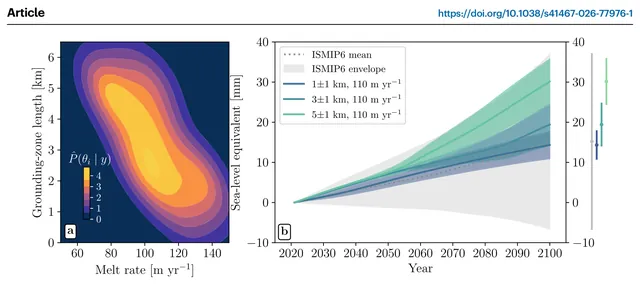
Melting grounding zones let a model match Thwaites' retreat and double its sea-level share
When an ice-sheet model lets seawater melt ice several kilometers inland of the grounding line, it matches 27 years of Thwaites observations and projects about twice the earlier sea-level contribution by 2100.
-
 Clouds and aerosols
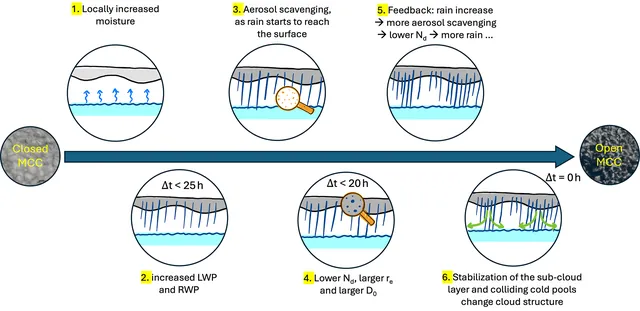
Rain and falling droplet counts build up about 25 hours before stratocumulus clouds break into open cells
EarthCARE and GOES data show that in stratocumulus, liquid water and rain rise first, then droplet numbers fall, over about 25 hours before closed cells turn into open cells.
-
 Clouds and aerosols
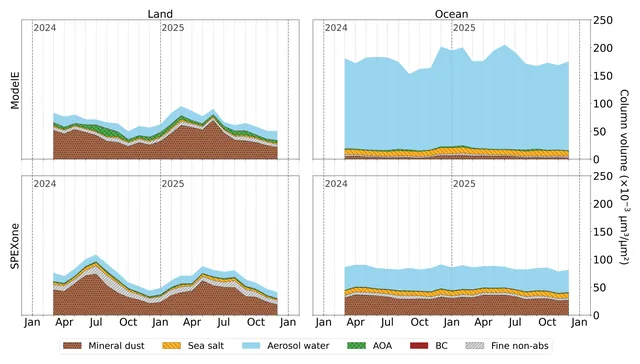
PACE satellite aerosol data and ModelE agree on fine aerosol but split on coarse dust and water
The first comparison of PACE SPEXone aerosol composition with a climate model finds good fine-mode agreement over land, but a large ocean mismatch in mineral dust and aerosol water that the authors trace partly to retrieval assumptions and partly to the model.
-
 Clouds and aerosols
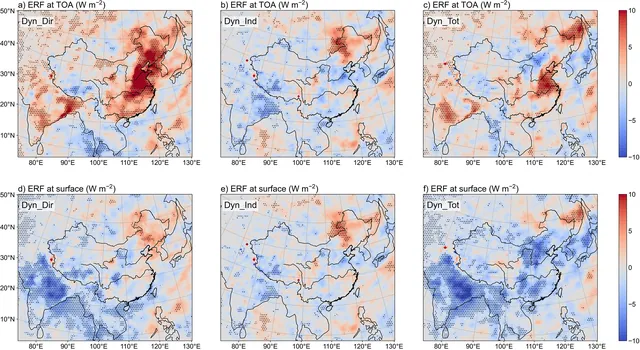
Faster black carbon aging in a regional model shifts East Asian summer climate effects
Letting black carbon aging speed vary with local pollution, instead of fixing it at 1.15 days, lowers BC column burden, raises near-surface BC in parts of eastern China, and changes the simulated radiative forcing and the summer north-dry, south-wet pattern.
-
 Forecasting
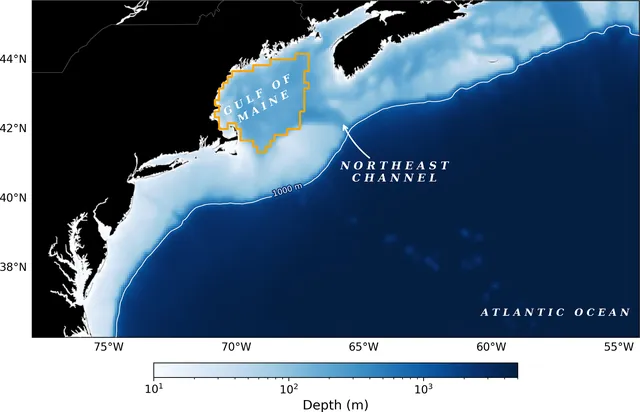
Regional model skilfully predicts Gulf of Maine bottom temperature, oxygen and acidity years ahead
A high-resolution regional ocean model can forecast Gulf of Maine bottom conditions for several years, and it points to cooler water, more oxygen and lower pH and aragonite saturation through 2027.
-
 Cryosphere
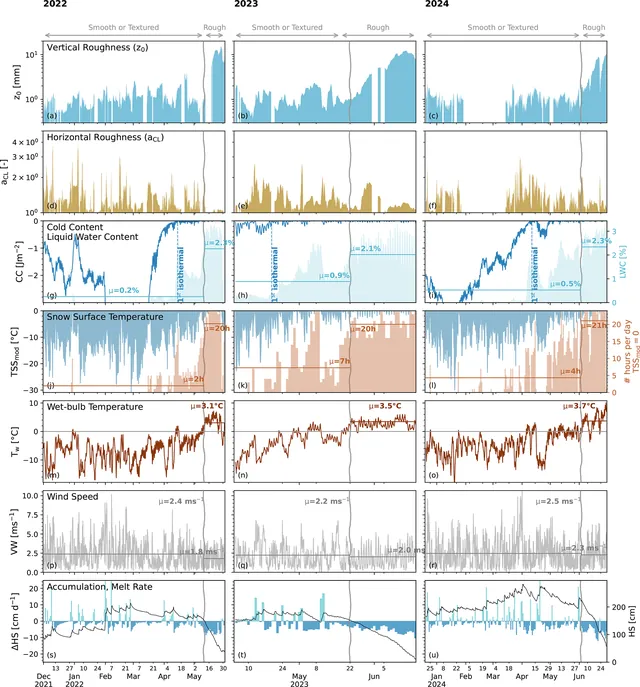
Snow surface roughness from suncups tracks albedo loss on alpine snow over three seasons
Over three melt seasons in the Swiss Alps, suncup roughness and impurities together lowered snow albedo by 0.03–0.1, and albedo follows a logarithmic curve with aerodynamic roughness length z0.
-
 Forecasting
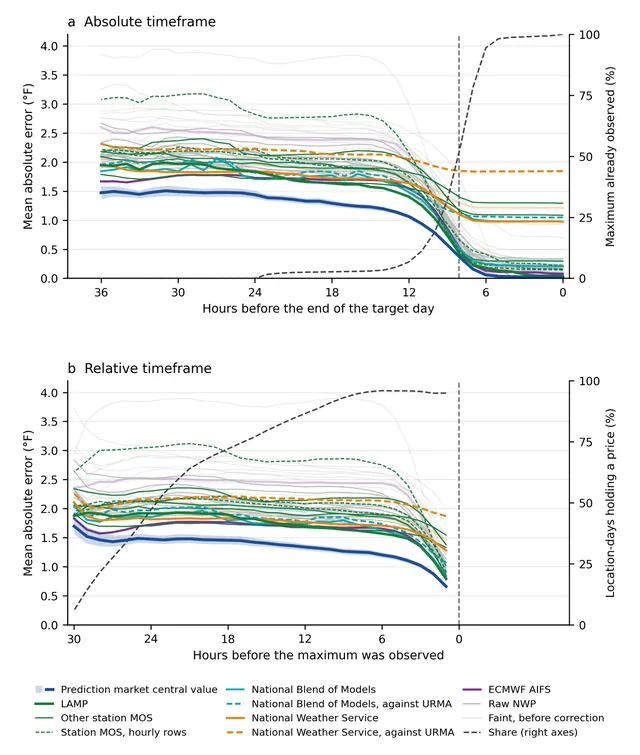
A prediction market beat 20 operational systems at forecasting daily high temperatures
In this preprint, prices on a daily-high-temperature prediction market had lower error than 20 operational forecast systems, including statistically corrected and human-edited forecasts, at nearly all lead times.
-
 Oceans
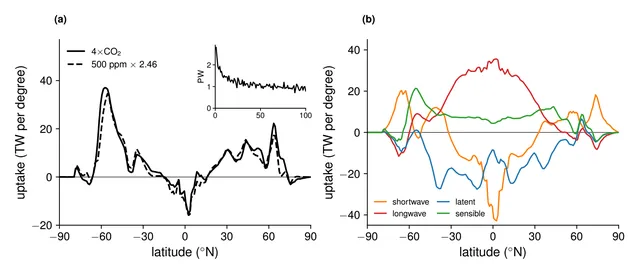
Preindustrial ocean circulation alone drives over half of modeled Southern Ocean heat uptake
In one climate model, the Southern Ocean's heat uptake under 4×CO2 is mostly set by the old circulation, with upwelling fixing its size and along-isopycnal diffusion fixing its slow decline.
-
 Extremes
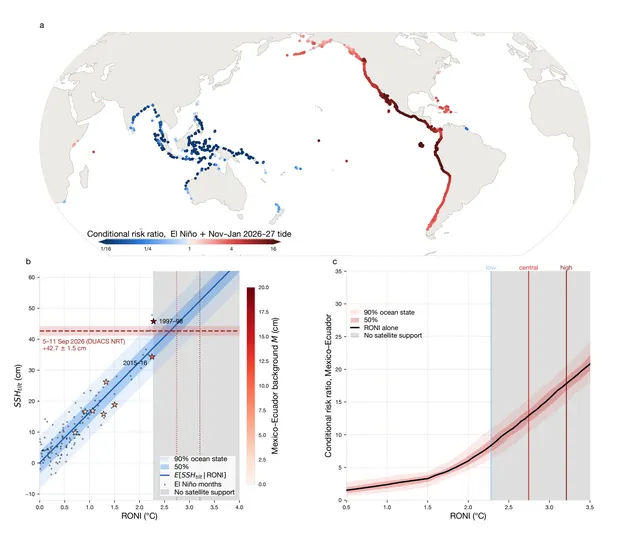
Projected 2026–27 super El Niño could raise east Pacific extreme sea-level risk about tenfold
A preprint analysis finds that El Niño raises coastal extreme sea-level risk mostly by lifting background sea level along the eastern Pacific, and that the projected 2026–27 super event could make the old 99th-percentile high water a recurring event there.
-
 Climate change
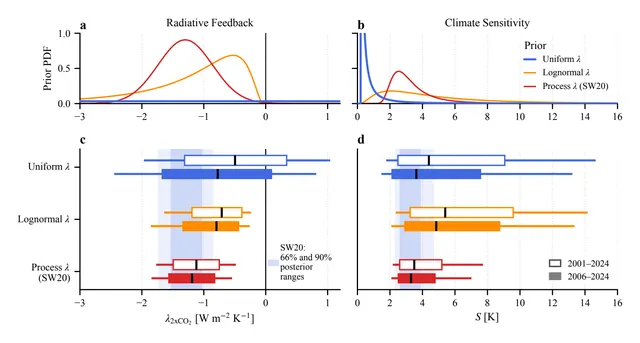
Energy-imbalance trends since 2006 fit climate sensitivity estimates consistent with past assessments
Satellite-era energy-budget trends point to high climate sensitivity if you take them at face value, but once uncertainty is included they fit the 2 to 5 K range from earlier assessments.
-
 Clouds and aerosols
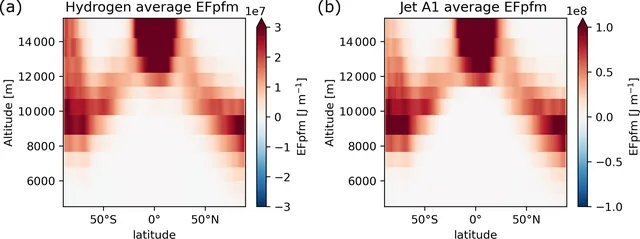
Hydrogen aircraft contrail cirrus forcing is modelled as 66 % lower than for jet fuel
In a model, hydrogen-powered aircraft make contrail cirrus with much less warming than jet fuel aircraft in most cases, but lubrication oil droplets could erase the benefit.
-
 Climate change
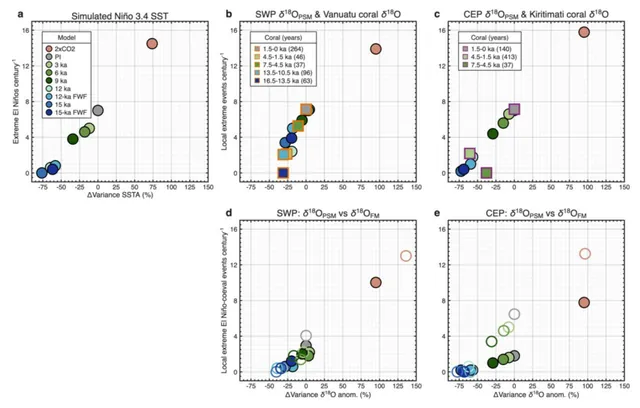
Fossil corals and model runs both show weaker El Niño in the cold deglaciation
Coral records from Vanuatu dated to about 12 and 15 thousand years ago show weaker year-to-year variability, and climate model runs suggest El Niño and its extreme events grow as the climate warms.
-
 Cryosphere
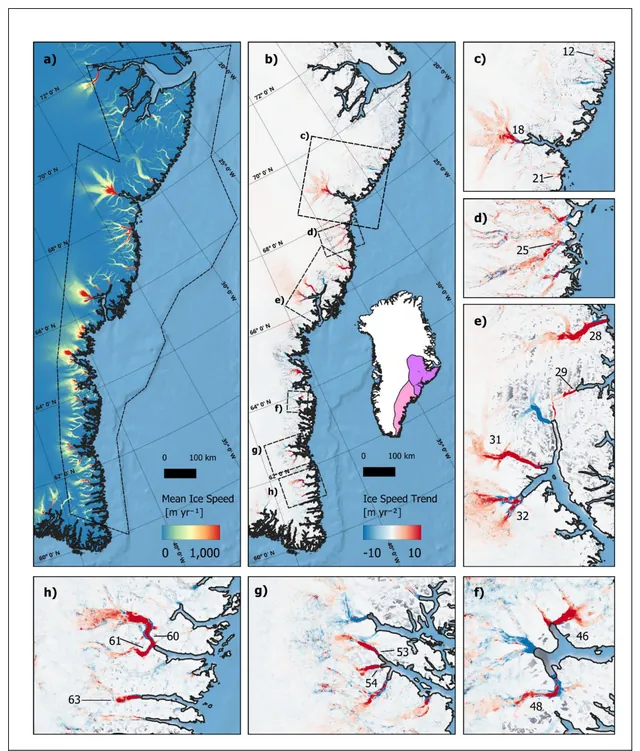
Glaciers in central and southeast Greenland sped up together from 2016 to 2020
Satellite data show that most of 66 marine-terminating glaciers in central and southeast Greenland accelerated together from 2016, peaked around 2020, then slowed only partly, as warm ocean water appeared at the same time.
-
 Extremes
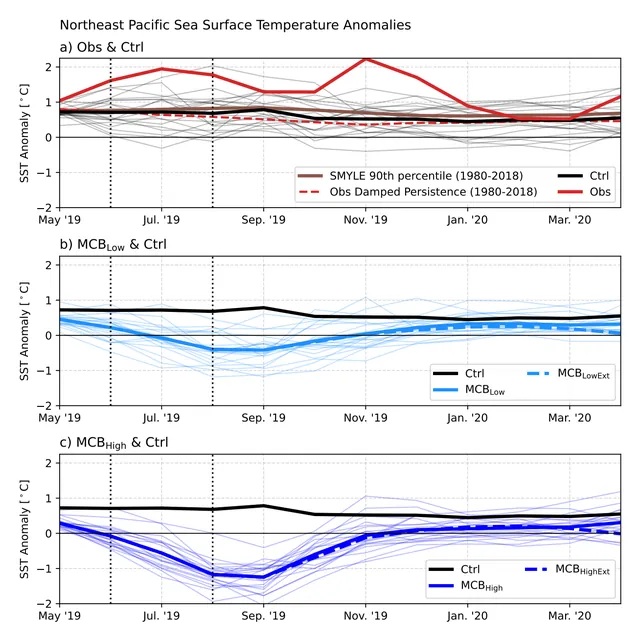
Short, local sea salt spraying cooled a simulated 2019 Northeast Pacific marine heatwave
In a climate model, spraying sea salt aerosol over the Gulf of Alaska from May to September 2019 cooled the surface and eased the heatwave, with mostly local effects.
-
 Atmospheric chemistry
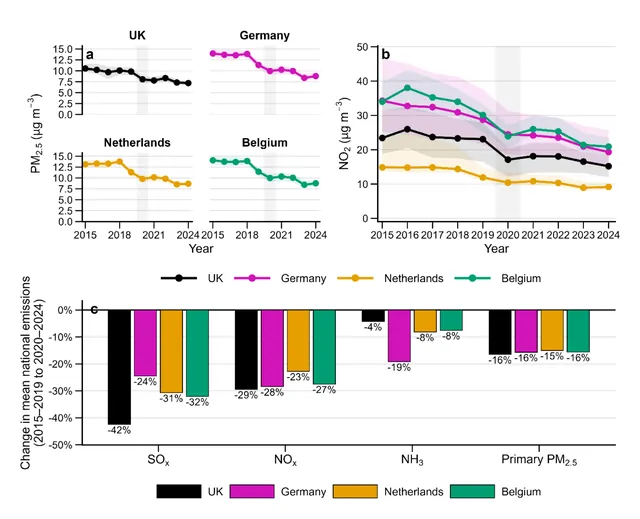
UK fine particle levels fell sharply after 2019, mainly from less ammonium nitrate
The authors find that UK PM2.5 dropped quickly from 2019-2020 mainly because ammonium nitrate fell, as lower nitrogen oxide emissions across Europe cut the pollution arriving from the continent.
-
 Forecasting
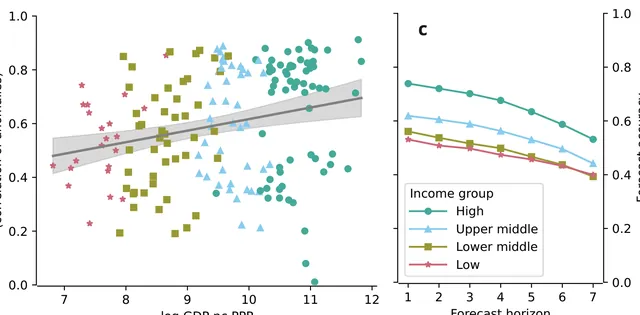
Temperature forecasts are much less accurate in low-income countries than in rich ones
A seven-day temperature forecast in a high-income country is about as accurate as a one-day forecast in a low-income country, and the gap has barely closed in 20 years.
-
 Hydrology
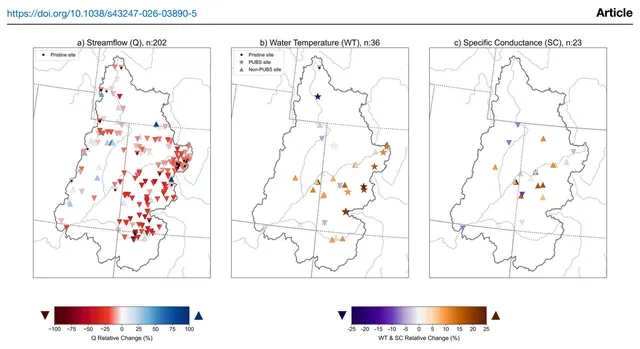
Droughts cut Upper Colorado streamflow and raised stream temperature and salinity
In four severe droughts from 1998 to 2022, Upper Colorado River Basin streams ran lower, warmer and saltier, and how much they changed depended on catchment traits such as withdrawals, forest cover and baseflow.
-
 Hydrology
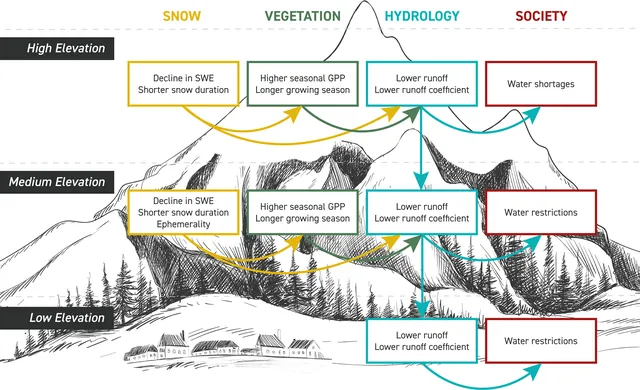
Italian snow droughts cut summer runoff by about half, raise high-elevation plant growth and strain water supply
In 38 Italian mountain catchments, snow droughts, mostly warm and dry, shortened the snow season, roughly halved summer runoff, boosted high-elevation plant productivity, and hit water supply from huts to foothills.
-
 Oceans
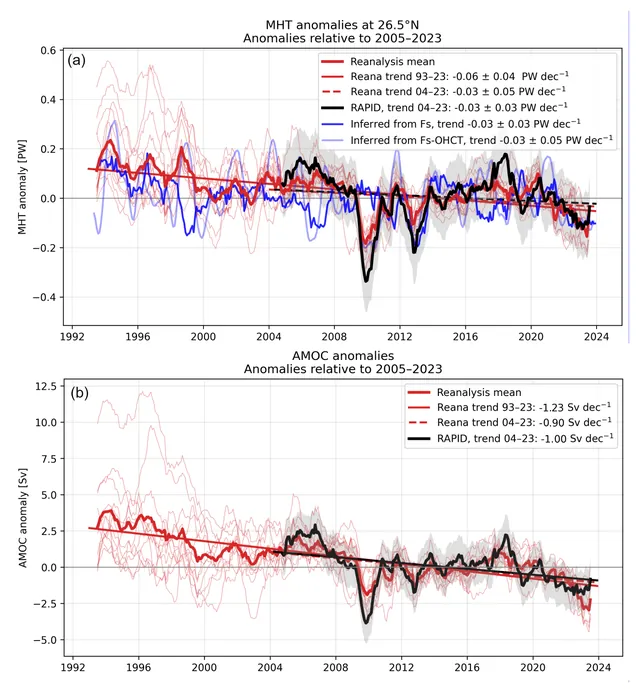
Ocean reanalyses show Atlantic heat transport falling since 1993, but with wide uncertainty
Seventeen ocean reanalyses roughly match observed Atlantic heat transport, mostly run low in the mean, and point to a decline since the early 1990s whose size is uncertain.
-
 Extremes
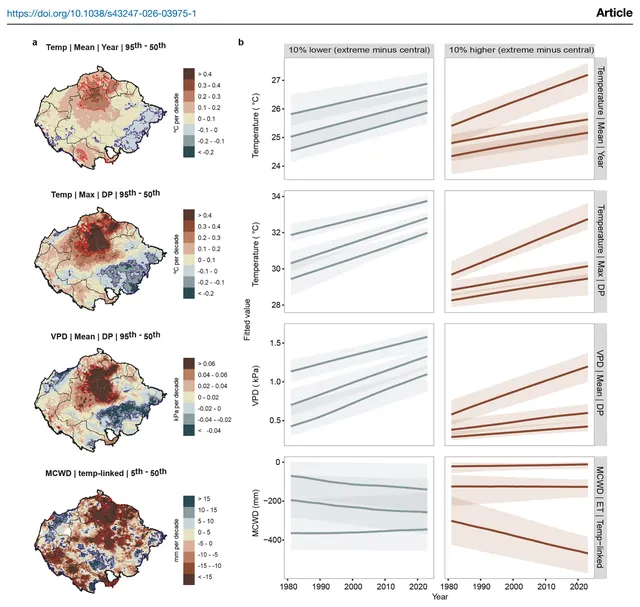
Amazon heat and water-deficit extremes are rising much faster than average trends
Across Amazonia from 1981 to 2023, extreme heat and temperature-linked water deficit rose much faster than average conditions, fastest in the central-north.
-
 Extremes
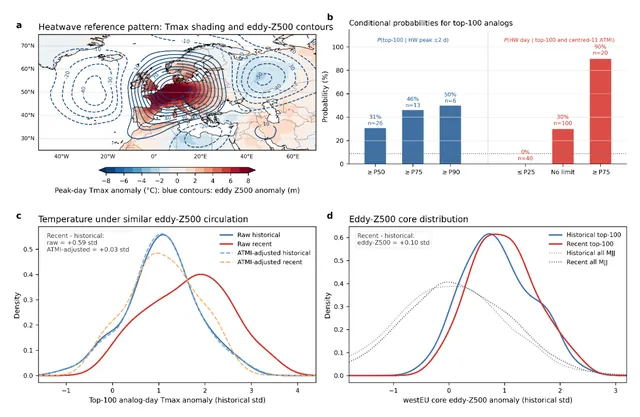
A warmer North Atlantic tracks rising western European heatwaves under similar weather patterns
Western European heatwave days have risen since the 1990s mainly because a warmer Atlantic background lets similar circulation patterns produce much more heat, according to this preprint.
-
 Extremes
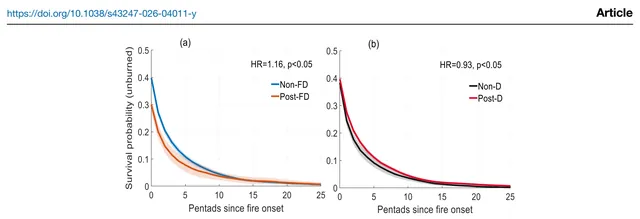
Wildfires after flash droughts in the US spread faster early than other fires
Fires that start during rapid root-zone soil drying burn through nearby land faster early on, while background dryness without rapid onset shows a weak or inconsistent link.
-
 Cryosphere
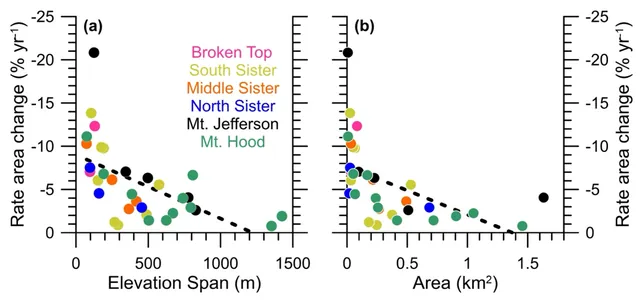
Oregon central Cascade glaciers lost about 20 % of their area from 2018/20 to 2023
Glaciers on five Oregon volcanos are shrinking 4.5 to 6.1 times faster than before 2018/20, and the smallest glaciers are shrinking fastest, which the authors link to warmer summers.
-
 Oceans
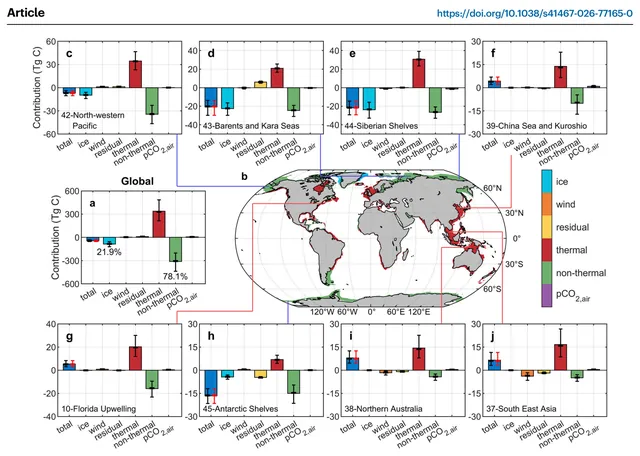
Marine heatwaves boost net CO2 uptake in global shelf seas, driven by polar regions
Across shelf seas worldwide, marine heatwaves raise net CO2 uptake by 11.0 ± 1.6%, because sea-ice loss and lower dissolved carbon in polar and subpolar waters outweigh weaker uptake in warmer regions.
-
 Extremes
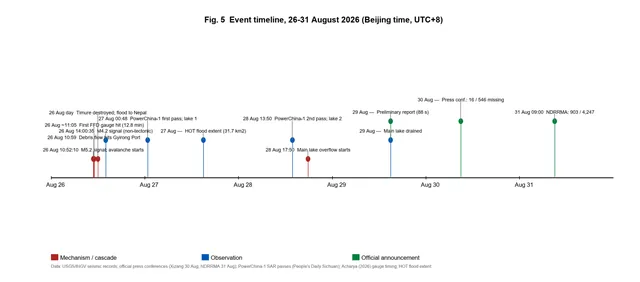
Open data show the first flood wave came within minutes, not from the later lake overflow
A preprint reconstructing the 26 August 2026 Langtang Lirung ice–rock avalanche finds the first flood wave reached the first gauge 12.8 min after the trigger, so it came from the debris flow and/or a rapid dam release, not the later lake overflow.
-
 Extremes
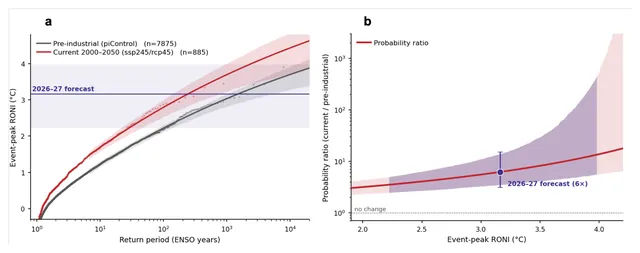
A record-strength 2026/27 El Niño is about six times more likely in today's climate
If the August 2026 forecasts are right, the 2026/27 El Niño would beat every event since 1870, and an event that strong is about six times more likely now than before industrial warming.
-
 Forecasting
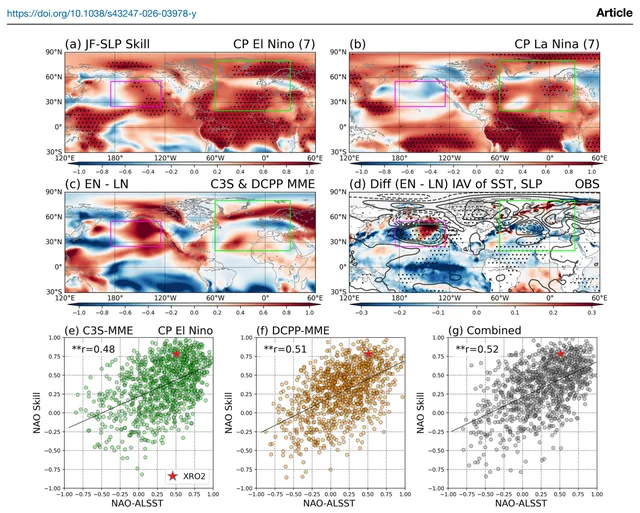
Central Pacific El Niño winters make North Atlantic Oscillation forecasts more skilful
In winters with a Central Pacific El Niño, seasonal forecasts of the North Atlantic Oscillation are much more skilful, probably because Aleutian-region ocean warmth feeds a link to the Atlantic.
-
 Hydrology
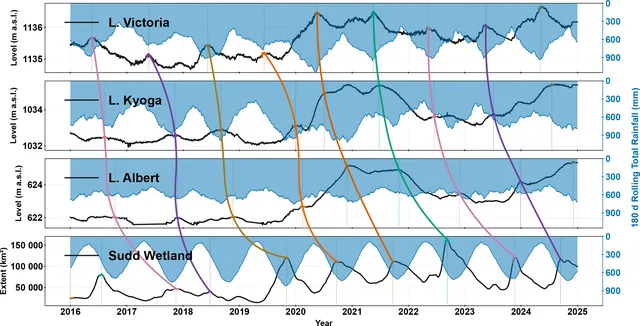
Flood waves take about 17 months to travel from Lake Victoria to the Sudd
Tracking individual flood peaks shows the White Nile moves a Lake Victoria flood to the Sudd wetland in about 17 months, not the four to five months that seasonal timing suggests.
-
 Hydrology
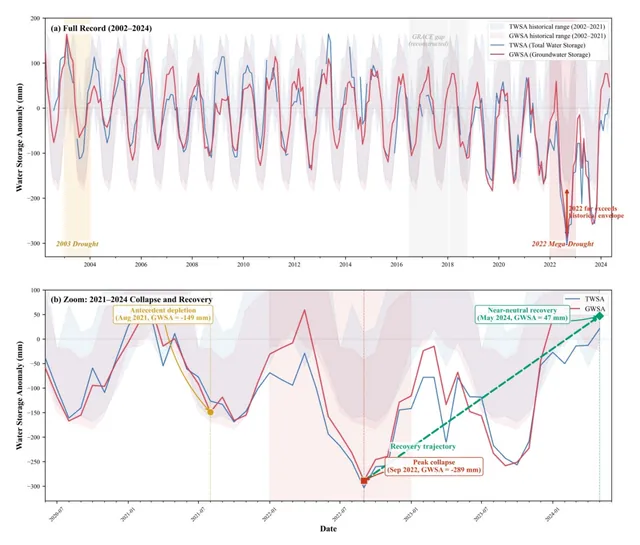
Depleted groundwater made the 2022 Po River drought far worse than rainfall alone explains
In the 2022 Po drought, an aquifer already drained before the dry year appears to have amplified the river's collapse and kept hydrological drought going long after rainfall indices recovered.
-
 Atmospheric chemistry
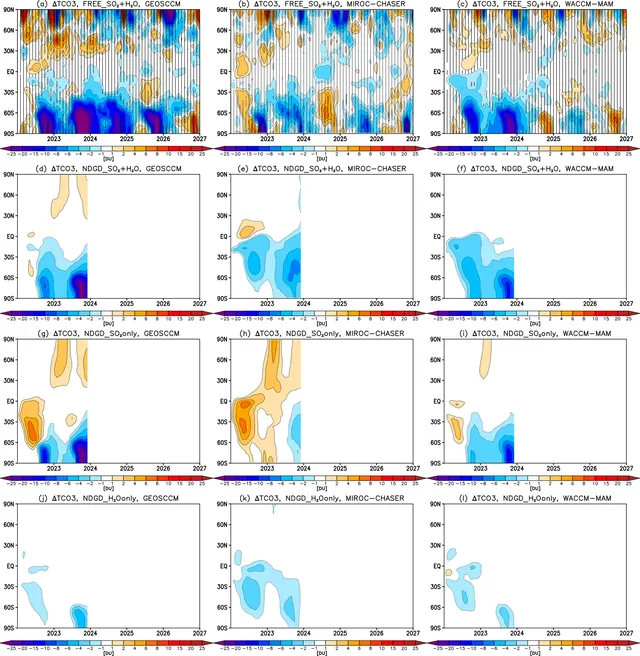
Models show Hunga eruption lowered southern ozone, with chemistry and dynamics equally important
In four-model simulations, the 2022 Hunga eruption reduced ozone in the southern mid- and high latitudes, with chemical and dynamical causes about equally large, but natural variability makes the signal hard to detect.
-
 Oceans
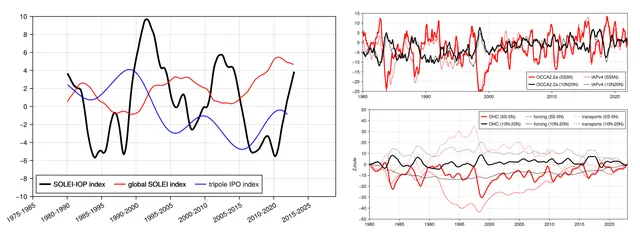
Ocean heat transport, not air-sea flux, drives regional warming in the top 200 m
In the upper 200 m of the ocean, heat piles up where currents carry it, while air-sea heat exchange mostly acts as a regional brake.
-
 Oceans
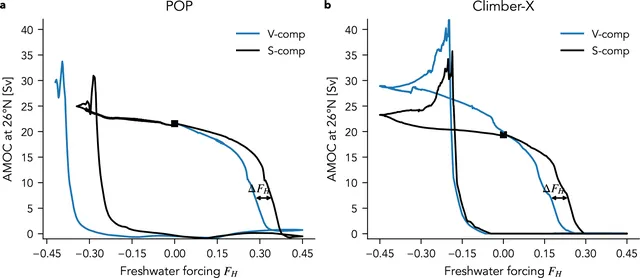
Adding salt at the surface delays modeled AMOC tipping versus spreading it through the ocean
In two models, compensating freshwater hosing with surface salt pushes the AMOC tipping point to higher forcing than volume compensation, so past thresholds may be too high.
-
 Extremes
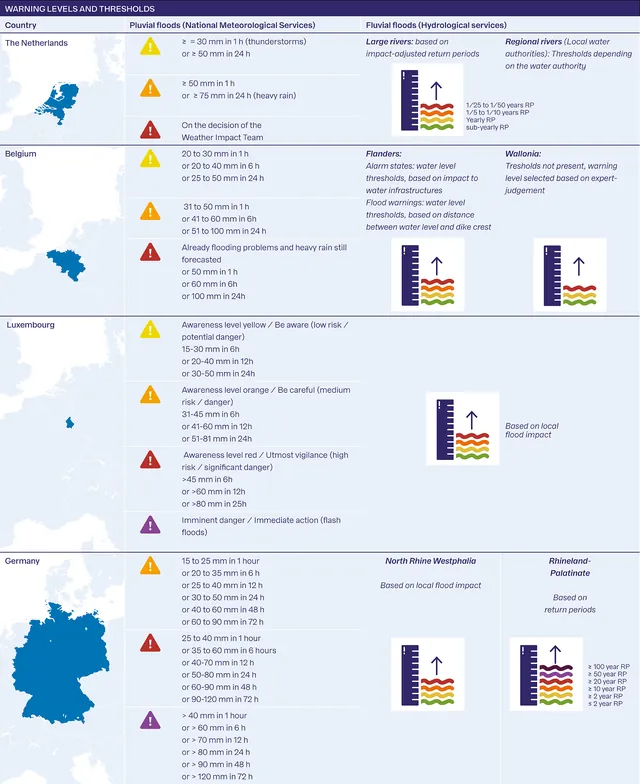
Flood warning systems in northwestern Europe improved after 2021 but still differ widely
Five years after the deadly July 2021 floods, warning systems in Germany, Luxembourg, the Netherlands and Belgium have improved, but warning levels and colours still differ and impact-based forecasts are rare.
-
 Clouds and aerosols
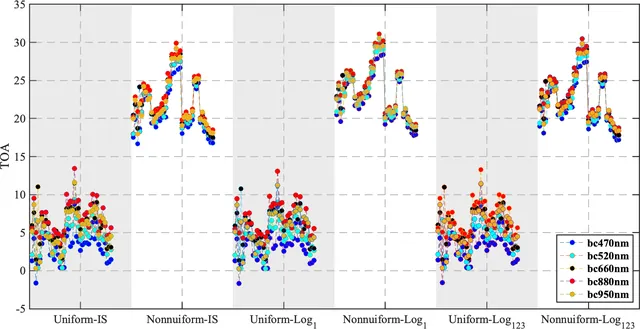
Realistic particle size and mixing shift black carbon radiative forcing in a coal region
In an industrial coal region of Shanxi, using the observed three-peak particle size and internal mixing, instead of simple standard assumptions, changes estimated absorption and radiative forcing by amounts comparable to local greenhouse gas forcing.