Extremes · Other
New weather and climate research on extremes whose main contribution is a finding rather than models and methods, observations or AI and machine learning, one page per paper.
All summaries
-
 Extremes
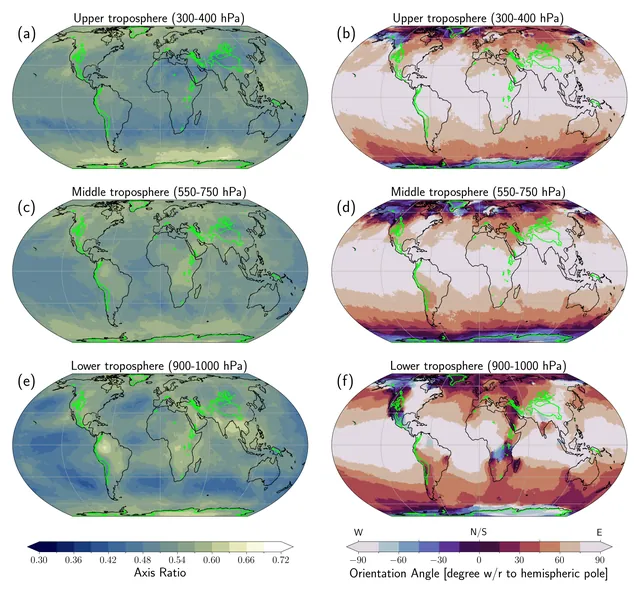
Surface heat extremes form tilted ellipses, not domes, and tropical ones stay shallow
In ERA5, near-surface heat extremes are elongated ellipses with a typical equivalent radius of 800km, reaching the upper troposphere far less often in the tropics than outside it, so the "heat dome" picture misleads.
-
 Extremes
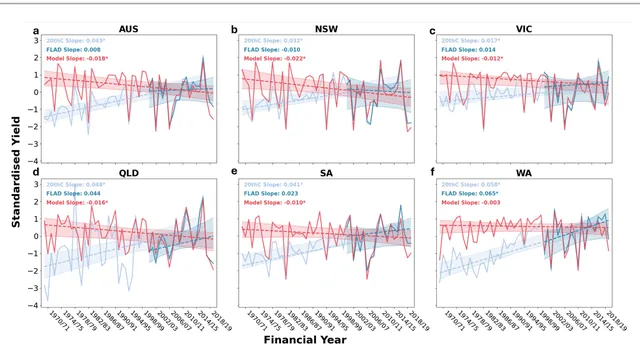
Drought and late-season heat are worsening for Australian wheat, masked by better farming
Using farm-level data, the authors find that climate extremes, mainly drought, drive most year-to-year wheat yield swings in Australia, and these extremes have grown since 1970 while technology has hidden the effect.
-
 Extremes
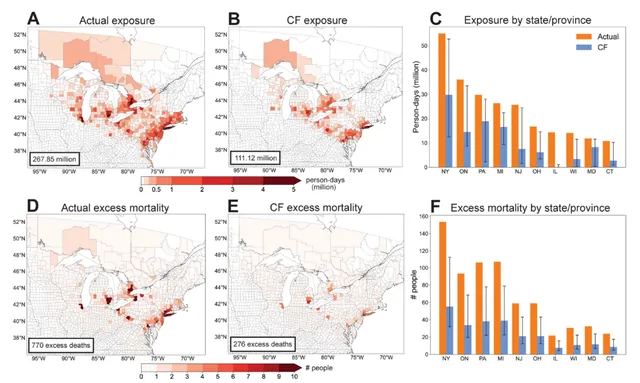
Climate change roughly tripled smoke pollution and deaths in the July 2026 fire event
A rapid attribution study estimates that human-caused climate change made the July 2026 wildfire smoke event about three times more harmful, with 770 excess deaths versus 276 in a world without climate change.
-
 Extremes
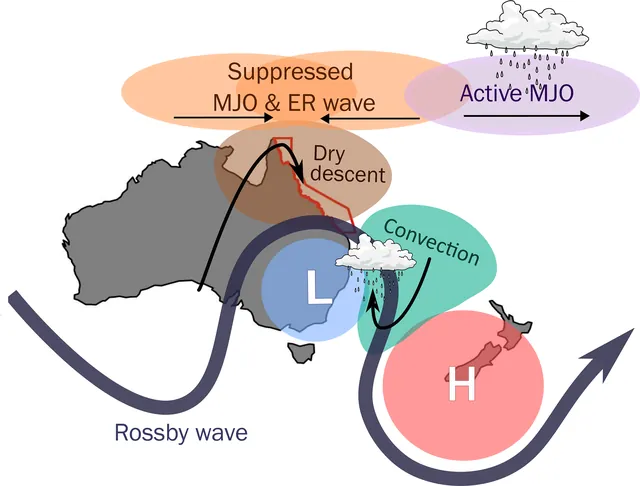
Stalled low-pressure systems and tropical waves keep Great Barrier Reef doldrums going
Doldrums over the Great Barrier Reef last longer when a cyclonic anomaly stalls over south-east Australia and tropical waves line up to keep westerly winds opposing the trade winds.
-
 Extremes
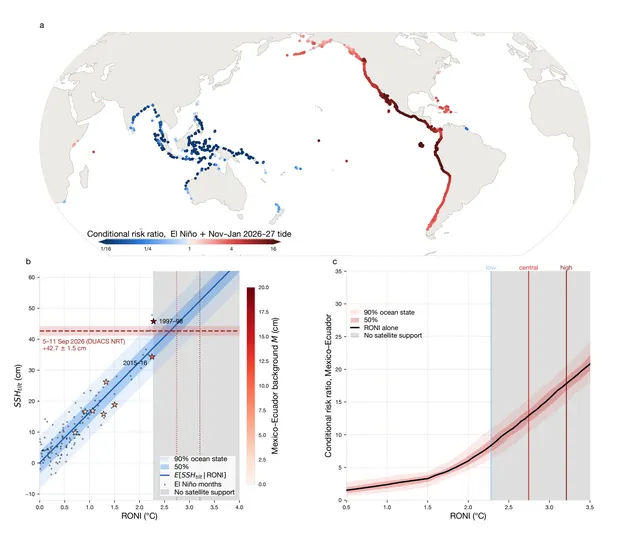
Projected 2026–27 super El Niño could raise east Pacific extreme sea-level risk about tenfold
A preprint analysis finds that El Niño raises coastal extreme sea-level risk mostly by lifting background sea level along the eastern Pacific, and that the projected 2026–27 super event could make the old 99th-percentile high water a recurring event there.
-
 Extremes
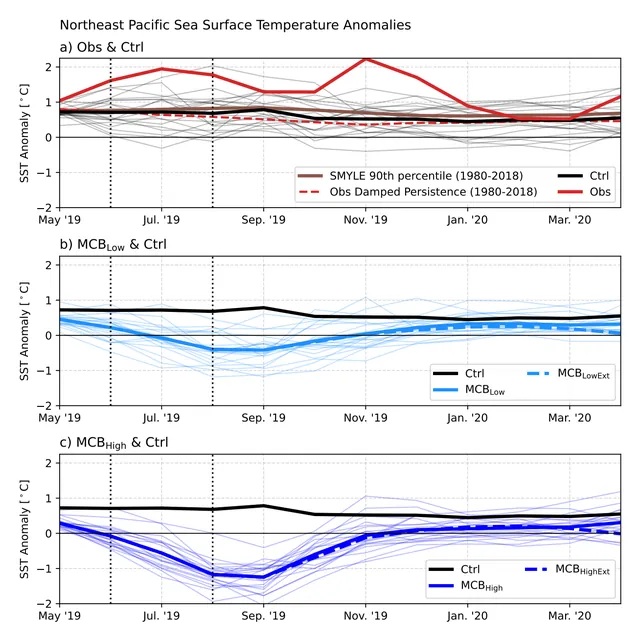
Short, local sea salt spraying cooled a simulated 2019 Northeast Pacific marine heatwave
In a climate model, spraying sea salt aerosol over the Gulf of Alaska from May to September 2019 cooled the surface and eased the heatwave, with mostly local effects.
-
 Extremes
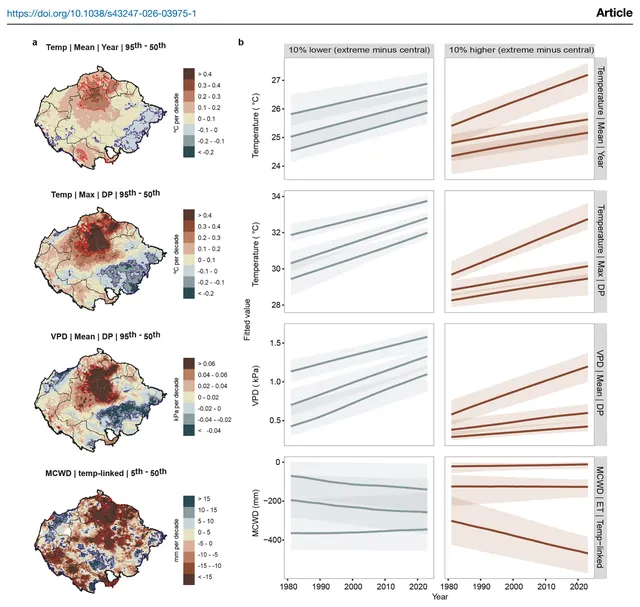
Amazon heat and water-deficit extremes are rising much faster than average trends
Across Amazonia from 1981 to 2023, extreme heat and temperature-linked water deficit rose much faster than average conditions, fastest in the central-north.
-
 Extremes
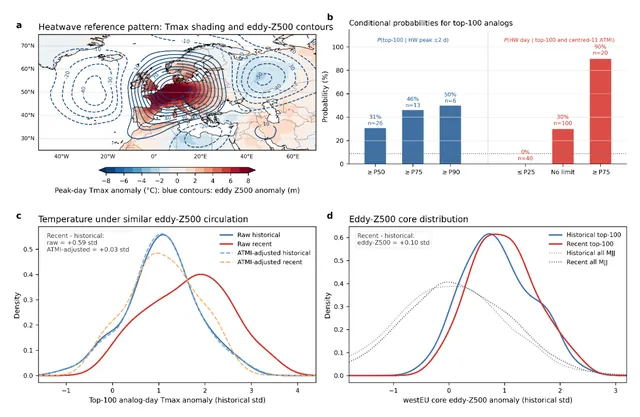
A warmer North Atlantic tracks rising western European heatwaves under similar weather patterns
Western European heatwave days have risen since the 1990s mainly because a warmer Atlantic background lets similar circulation patterns produce much more heat, according to this preprint.
-
 Extremes
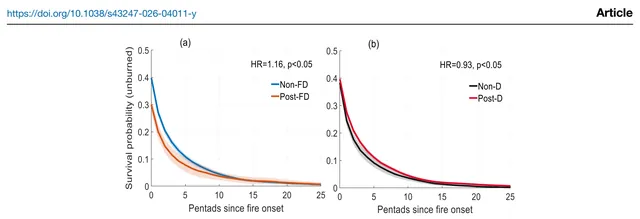
Wildfires after flash droughts in the US spread faster early than other fires
Fires that start during rapid root-zone soil drying burn through nearby land faster early on, while background dryness without rapid onset shows a weak or inconsistent link.
-
 Extremes
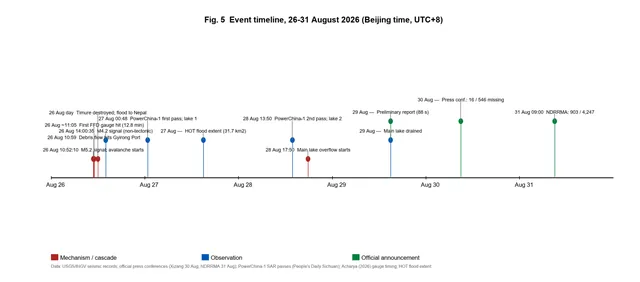
Open data show the first flood wave came within minutes, not from the later lake overflow
A preprint reconstructing the 26 August 2026 Langtang Lirung ice–rock avalanche finds the first flood wave reached the first gauge 12.8 min after the trigger, so it came from the debris flow and/or a rapid dam release, not the later lake overflow.
-
 Extremes
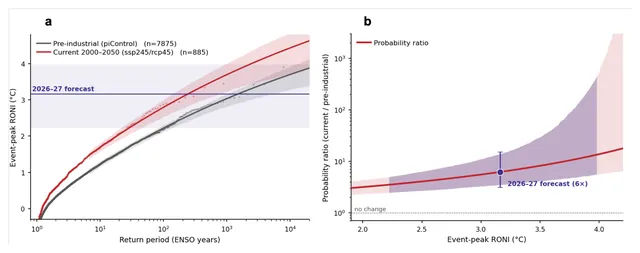
A record-strength 2026/27 El Niño is about six times more likely in today's climate
If the August 2026 forecasts are right, the 2026/27 El Niño would beat every event since 1870, and an event that strong is about six times more likely now than before industrial warming.
-
 Extremes
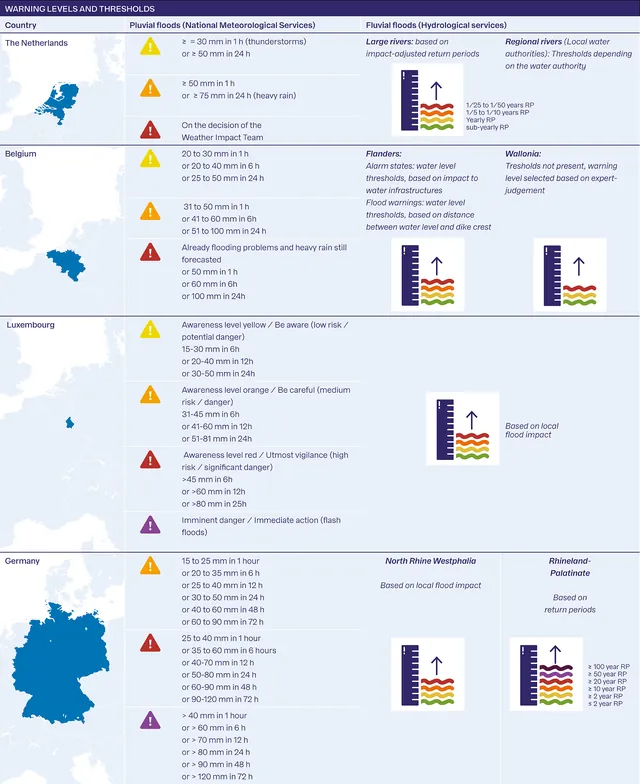
Flood warning systems in northwestern Europe improved after 2021 but still differ widely
Five years after the deadly July 2021 floods, warning systems in Germany, Luxembourg, the Netherlands and Belgium have improved, but warning levels and colours still differ and impact-based forecasts are rare.
-
 Extremes
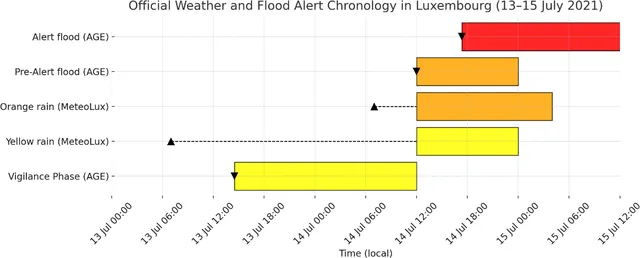
Luxembourg's 2021 flood warnings were held back by rules, not by poor forecasts
Strong forecast signals for the July 2021 Luxembourg flood existed days ahead, but warning rules built on single-station deterministic thresholds left them unused.
-
 Extremes
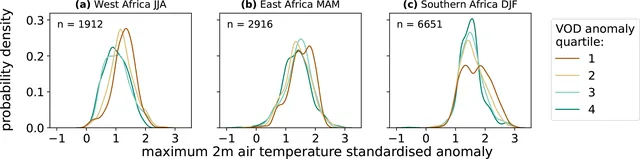
Dry land before a flash drought is linked to stronger heat feedback during it
Satellite data show that flash droughts starting from water-stressed land have stronger surface heating, and in parts of Africa low vegetation water content 1–2 months earlier goes with hotter peaks.
-
 Extremes
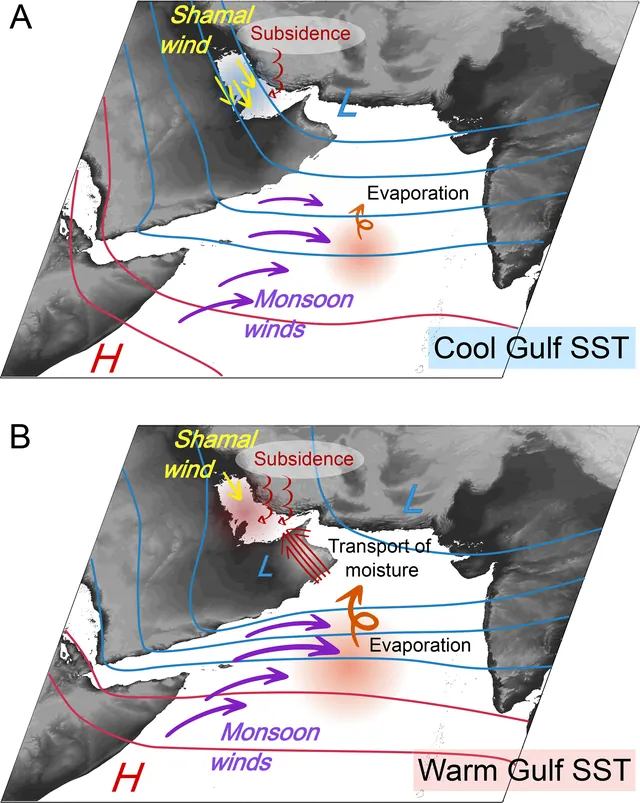
Weaker Shamal winds, La Niña and negative NAO drive the Gulf's hottest summers
Extreme summer sea temperatures in the Arabian Gulf come from weaker local winds and trapped moist air, and ENSO and the NAO together explain over 50 % of the year-to-year variation.
-
 Extremes
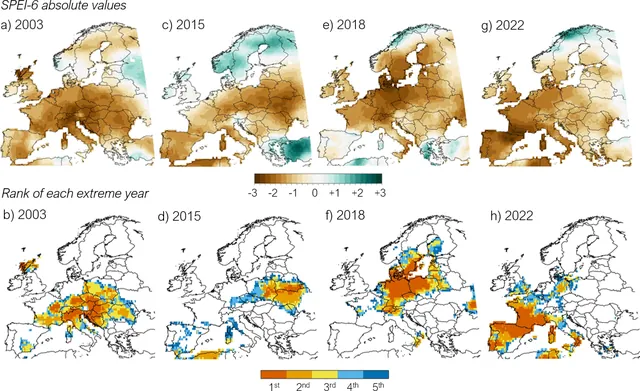
Survey of 481 water managers shows reactive drought responses across Europe in 2022
The 2022 drought showed that European water managers see rising drought risk but mostly respond with short-term, supply-side fixes, so the authors call for a binding European Drought Directive.
-
 Extremes
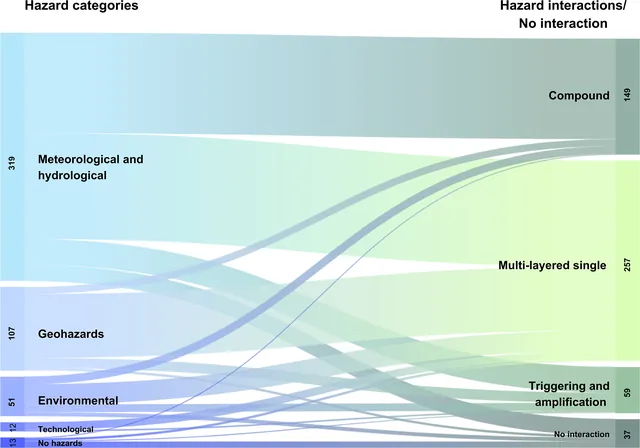
Review of 192 papers finds few indicators built for multi-hazard or multi-risk use
Many studies labelled multi-hazard simply layer separate single-hazard results, and few develop indicators that capture how hazards interact or how risks combine.
-
 Extremes
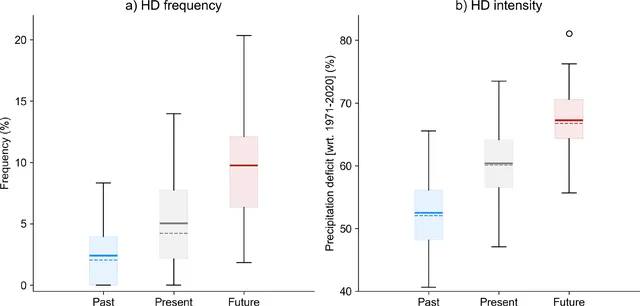
Extreme droughts in central Chile projected to double in frequency by 2070
Climate models show that extreme droughts in central Chile will occur twice as often by 2070 compared to today, with greater intensity.
-
 Extremes
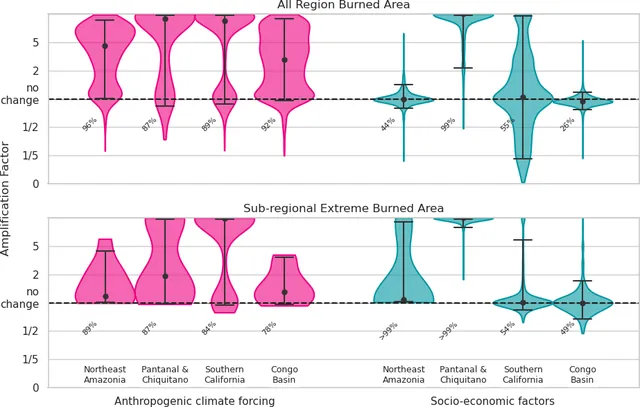
Fire emissions ran 9 % above average in 2024–2025 despite less burned area
The 2024–2025 fire season released more carbon than average even though less land burned, and the report's models find climate change made four extreme regional fire events more likely.